Showing posts with label Non-fiction. Show all posts

Thursday, August 16, 2018

The Heroes of Tolkien by David Day

 The cover of The Heroes of TolkienI wanted to like this book, but instead I had to fight the urge to chunk it against the wall much too often. Nevertheless, there were some good things among the bad and the ugly.

The good:

  • Fancy binding and paper and gorgeous illustrations; it is visually a beautiful book.
  • The included charts can be useful, especially as a quick reminder of various relations (but you can’t rely on them for spelling and dates.)
  • Some intriguing takes and interesting comparison with various mythologies and real historical events/personages (although the latter is basically calling Tolkien’s work allegory, which he was strictly and explicitly against, without actually calling it so) and I have learnt some new things about the sources of Tolkien’s ideas and etymology and was reminded of some things I had forgotten. 
  • But mostly, it just made me want to reread actual Tolkien’s works yet again.
The bad:

  • The Heroes of Tolkien is a misleading title, since the book only deals with a selection of the most notable heroes from Tolkien’s works.
  • Equally misleading is the blurb, promising an examination of the complexities of Tolkien’s portrayal of good and evil and then doing no such thing.
  • The subject matter is dealt with superficially, without any in-depth insight into Tolkien’s heroes, so if you expect that, you will be disappointed and better off going for The History of Middle Earth (although I have yet to read it myself.)
  • The writing is all over the place, jumping from one topic to another, with out-of-place asides, and often repetitive. The effect is that of a collection of notes on historical, mythological, and literary similarities and connections, rather than a cohesive treatment of the subject in the title.
The ugly:

  • Many factual errors, confusing the reader and thus rendering the book useless as reference.
  • Day cannot keep the names straight – I know, it is hard with there being so many of them, but if one is writing a book about Tolkien’s heroes, I would consider getting the names right the bare minimum.
  • The Silmarillion in particularly is not Day’s strong point, but the book does improve with Parts VI and VII when he gets to The Hobbit and The Lord of the Rings, so perhaps he should have just stuck with those.
On the whole, I found The Heroes of Tolkien mostly a pretty package with insubstantial content, since it is not informative enough for beginners without some pre-existing familiarity with Tolkien’s work and feels lacklustre to someone who is a bit of a Tolkien nerd like me.

Thursday, September 14, 2017

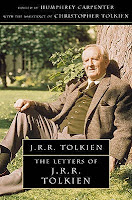
The Letters of J. R. R. Tolkien

Cover of The Letters of J.R.R. Tolkien
Tolkien’s letters are at times tedious and repetitive – just as life can be – but for the most part very compelling reading material.

For a fan of Tolkien’s works, it is interesting to read about the process of how they came to be written and published. Moreover, reading about his writing process itself is both inspiring and motivational to a writer, although Tolkien might be turning in his grave if he knew that people find his writing struggles either. Equally inspiring and thought-provoking are Tolkien’s world-views and philosophies, both general and academic, even if I disagree with some of them (which were a product of his time.)

The language, style, and tone of his letters range from intellectual and strictly formal to warm, familiar, and humorous in places, with an occasional special brand of ‘saltiness’ shining through which I greatly appreciated, and show him not only as an author but as a nuanced personality.  

Tolkien’s letters are probably best appreciated if read and digested little by little and not to be sped through, although I have done precisely that with the second half of the book because I got fed up with myself that it was taking me so long.

Overall, Tolkien’s letters are a fascinating read and therefore I definitely intend to return to them in the future.

Wednesday, August 01, 2012

All I Really Need to Know I Learned in Kindergarten by Robert Fulghum


SUMMARY (from Goodreads): A book to raise the spirits and warm the heart. Includes the famous Kindergarten essay that was read on the floor of the U.S. Senate.

MY OPINION:

This is a collection of short stories and essays. The author shares his contemplations about a wide range of life-issues, often sharing his personal experience.

The book is sometimes funny, sometimes touching, but always thought-provoking. I disagreed with some views expressed in it, but mostly found a lot of relatable material in Fulghum's writing. The individual stories/essays are very interesting, the writing is transparent and easily approachable, and the book is generally a fast read.

Everything I Really Need to Know I Learned in Kindergarten is probably best to be read as a meditation aid – one story a day, which you can think about in depth. However, I read a library copy which was due back shortly, so I read it in two sittings. I might have taken more from it had I read it more slowly, but  I liked it in spite od the rush.

RECOMMENDATION: If you are looking for something inspiring to make you think Everything I Really Need to Know I Learned in Kindergarten could be a good choice.

Wednesday, October 05, 2011

The Alarming History of European Royalty by Karl Shaw

Royal Babylon: Alarming History of European RoyaltySUMMARY (from Goodreads): An uproarious, eye-opening history of Europe's notorious royal houses that leaves no throne unturned and will make you glad you live in a democracy.

Do you want to know which queen has the unique distinction of being the only known royal kleptomaniac? Or which empress kept her dirty underwear under lock and key? Or which czar, upon discovering his wife's infidelity, had her lover decapitated and the head, pickled in a jar, placed at her bedside?

The Alarming History of European Royalty is history, but not as they teach it in school, and it underlines in side-splitting fashion Queen Victoria's famous warning that it is unwise to look too deeply into the royal houses of Europe.

MY OPINION:

The Alarming History of European Royalty deals with its subject in a sensationalistic manner. It mainly focuses on history of mental illnesses and sexual exploits of European royals, scandalising their behaviour.

The book is written in a tabloid-like style, which I disliked. Not only it focuses on bad things, it is at times also disrespectful, for example, when making fun of King George VI and his stammering problems.

Moreover, there are many inconsistencies or confusing information in the book, showing the lack of research behind them. The factual errors, such as stating the years of birth and death incorrectly, are also disturbing. One of such errors that strikes out is the one saying that Prince Albert died three years before he was born. These kinds of things are not just ridiculous but also unprofessional. The book obviously lacks some editing and revision. I must stress I read the book in translation, therefore some errors might have occurred during the translation process, but I find it hard to ascribe the majority of mishaps to the translator.

However, all the shortcomings put aside, I still could not put the book down, mainly because the information on all the connections between European royal families is intriguing.

Finally, The Alarming History of European Royalty provides some interesting data, but it should be taken with a grain of salt. The truth, I believe is always somewhere between scandalizing and sanctifying people.

RECOMMENDATION: This book is not to be taken as a serious read about history – if you want that, pick up a different book. But if you want to learn about all the true (or perhaps not so true) scandals of European courts and are willing to give some slack to the writing and inaccuracy, The Alarming History of European Royalty might be an interesting read. 

Wednesday, March 23, 2011

Cambridge Wizard Student Guide: The Curious Incident of the Dog in the Night-Time by Richard McRoberts

Cambridge Wizard Student Guide The Curious Incident of the Dog in the Night Time (Cambridge Wizard English Student Guides)SUMMARY: The Guide contains chapter summaries and character analysis with quotes, information about autism, sample essay questions and sample essays.

MY OPINION:

My review is based on the helpfulness of this student guide to ESL high schools students.

I think this book is somewhat useful to ESL students with advanced knowledge of English and above average grades. Those students might use the guide as a quick reference book to refresh their memory. The same goes for teachers in this case. Essay samples might be helpful to those same students in terms of showing them the level of writing they should aim to achieve.

Apart from the above, the guide has little use. The summaries are too general to be of any real help and character portrayals and other analysis too demanding for students struggling with mediocre and low grades.

RECOMMENDATION: I am somewhat disappointed by this book. Its main value is in serving as a reference book, but both teachers and students would have to use other resources when approaching Mark Haddon’s The Curious Incident of the Dog in the Night-Time.

Thursday, January 06, 2011

Dark Mysteries of the Vatican by H. Paul Jeffers

Dark Mysteries of the VaticanSUMMARY: The Catholic Church is the oldest and the most influential institution in the world. Its secretiveness has always been accompanied by lies, scandals and conspiracies. Dark mysteries of the Vatican include everything from the plot against the Templar Knights to sympathising with the Nazis, from exorcism to the Church’s view upon aliens and the end of the world.

MY OPINION:

At the beginning I have to say that this book was not what I had expected it to be. I had supposed it would either be gravely discrediting the Vatican or ardently defending it. However, Jeffers does neither of these.

Dark Mysteries of the Vatican is predominantly a factual book. It provides a lot of evidence acquired through a thorough research. Jeffers is a very objective author. Whichever myth, secret or rumour he focuses on, he tries to resolve it by stating factual proofs from various documents, including the vast quantity of material from the Vatican archives.

The most interesting parts of the book to me were those about the book prohibition process and murders and the history of the Catholic Church, from which I actually learned something new. Generally there was only few data surprising or new to me, but it might be just because I have been always interested in the Church and I knew a lot about it prior to reading this book.

Also, I felt at times the book is even a little over packed with data and in other places lacking information. The latter is understandable due to a very limited access to some Vatican documents. What has always been most intriguing for me and is still left unsolved is the question why the Church is so reluctant to make public the documents which could clarify some confusing issues or in particular cases possibly clear its name, unless those documents would be unfavourable to the Church, or it might be somehow for our own benefit.

All in all, Jeffers’s objective, fact-based approach is praiseworthy, although it has one flaw as I see it, which is that it hardly provides any conclusive answers. Nevertheless, it is not necessarily a bad thing, since everyone can come to their own conclusions according to their beliefs and in this way the book avoids offensiveness, which is very important dealing with such a delicate subject matter.

RECOMMENDATION: If you are interested in all the mysteries about the Vatican and the Catholic Church and you are not too squeamish about scandalous insinuations, this is definitely the book to read, but do not expect to get any final answers. Instead, you will get a lot of factual evidence upon which you can form your own opinion.

Thursday, December 30, 2010

Manual of the Warrior of Light by Paulo Coelho

book cover of 

Manual of the Warrior of Light 

by

Paulo CoelhoSUMMARY (by FantasticFiction): Within each of us is a warrior of light. Each of us is capable of listening to the silence of the heart, of accepting failure without letting it get us down and of holding onto hope even in the face of weariness and depression. Values like love for all things, discipline, friendship and learning to listen to our own hearts are the arms with which this warrior confronts the battles we face in the name of personal growth and in the defence of the light. On every page there is an inspirational thought, which can be read as part of Paulo Coelho's whole philosophy or used form the basis of a daily meditation. This text is a guide to the process.

MY OPINION:

I find this book a little difficult to review, because it consists of so many short fragments. It is, as the title suggests, a kind of a guide for self-improvement and personal growth. Manual of the Warrior of Light cannot be read as a book from the beginning to the end, but perhaps as a meditational aid read by sections.

The book contains a short frame story about a boy trying to be able to hear the bells of a drowned temple, which I believe is a metaphor for being able to listen to our conscience and being in touch with the Universe or with God.

Embedded in the frame story are numerous motivational quotes, thoughts, and advice about leading a life of a good person. Many of these are contradictory to one another. I guess this is because people and the world itself are full of contradictions. I believe contradictions are essential to existence: light and darkness, safety and danger, good and evil, etc. could not be distinguished for what they are without the existence of their opposites.

Therefore, despite being paradoxical, many thoughts in Manual of the Warrior of Light are truly inspiring. Some, however, seem to me as clichés. Nevertheless, I like the philosophy behind the book, and I will definitely pick it up to read a segment or two from time to time.

RECOMMENDATION: This is the book you read by sections when you need an encouraging thought to give you motivation and strength for being a good person and fighting for your beliefs.  

Monday, December 06, 2010

Ripe for the Picking by Annie Hawes

Ripe for the PickingSUMMARY (by goodreads): Annie Hawes is an Englishwoman who has lived in a tumbledown cottage in the Ligurian hills in Italy for about a decade. In Ripe for the Picking she picks up the story of her book Extra Virgin to recount more of her adventures among the locals.

MY OPINION:

In Ripe for the Picking, Annie Hawes does not just pick up the story from where she finished Extra Virgin, but also its style, language and tone, altogether functioning very refreshingly. Again, she adds somewhat educational insight into coexistence of two cultures. This time it is about family life, love, relationships and repairs.

Describing her settling into the Ligurian lifestyle and the troubles, misunderstandings and twists it brings, Hawes retains the objectivity she established in Extra Virgin. Despite so much similarity with Extra Virgin, its sequel is not familiarly boring as someone might fear, but familiarly interesting. Although there is nothing very new, the story flows nicely and steadily captures the readers’ attention throughout the book, mainly because of the strong main storyline.

Basically, there is not much more to say about Ripe for the Picking that I have not yet said about Extra Virgin. Yet, Ripe for the Picking still offers some more of the same and it is probably what a reader might expect and also enjoy.  

RECOMMENDATION: Anyone who liked Extra Virgin and wants some more of the same relaxation type of atmosphere reading is bound to like Ripe for the Picking, too.

Saturday, November 20, 2010

Extra Virgin by Annie Hawes

Extra VirginSUMMARY (by the publisher): A small stone house deep among the olive groves of Liguria, going for the price of a dodgy second-hand car. Annie Hawes and her sister, on the spot by chance, have no plans whatsoever to move to the Italian Riviera but find naturally that it's an offer they can't refuse. The laugh is on the Foreign Females who discover that here amongst the hardcore olive farming folk their incompetence is positively alarming. Not to worry: the thrifty villagers of Diano San Pietro are on the case, and soon plying the Pallid Sisters with advice, ridicule, tall tales and copious hillside refreshments...

MY OPINION:

What I liked about this book the most was that, even though Annie Hawes writes about her own experience, her writing is very objective. She does not give in to the temptation of many memoirs’ or travelogues’ writers to only describe themselves and their own culture as the norm and everything else as strange or ridiculous. In her writing about Ligurian life and customs, Hawes includes just the right amount of self-criticism, often accompanied by sarcasm, altogether functioning funny and refreshing.

Thus, Extra Virgin is not just an entertaining book about Hawes’s experience, but also a documentary about a clash of two very different cultures and a proof that differences can complement and enrich people. At first, Hawes and her sister find Ligurians strange and visa versa, and both sides have difficulties understanding one another. Yet, through many funny social mistakes and misunderstandings they get to know each other, and each new resolved mystery about the others’ crazy behaviour brings them closer. 

Generally, Hawes’s writing is a testimony about coexistence of two cultures, both benefitting from it. Two modern English girls learn a lot about farming and get plentiful skills in self-sufficiency and survival, meanwhile they are the first signs of modernization which improves the farmers’ lives, but does not enslave them. 

Overall, Hawes joins modern and traditional, urban and rural, fast and slow rhythm of life into a living the readers can grow fond of and maybe even wish to experience by themselves. I know I do.

RECOMMENDATION: Would you like a short recess in the warm Italian sun? Reading Extra Virgin is the closest thing to it. 

Sunday, August 15, 2010

Exterminate All the Brutes by Sven Lindqvist

Exterminate All the BrutesSUMMARY (by the publisher): Sweden's Sven Lindqvist provides a unique study of Europe's dark history in Africa, written in the form of a travel diary. Lindqvist examines the legacy of European racism, setting Conrad's Heart of Darkness in context and helping us to understand that most terrifying of Conrad's lines "Exterminate all the brutes".

MY OPINION:

Regarding racism, genocide and the Holocaust, I think at one point of their life everyone has asked themselves the question: how could this happen? In Exterminate All the Brutes Sven Lindqvist provides a comprehensive answer to this very question. To explain the development of European racism Lindquist takes a reader on a triple voyage.

The first voyage is a description of his own journey across the Sahara. Following Lindquist on his route from the north of Africa southwards the reader becomes familiar with the current situation in Africa. Lindqvist presents the people, their economic and social situation, the traditions, their mentality, the political circumstances and the corrupted and exploitative officials.

The second voyage is the red line of Lindqvist’s book, namely, constant references to Joseph Conrad’s Heart of Darkness. Lindquist uses Heart of Darkness to illustrate the main topic of his book, the journey from the first sprouts of racism in Europe to its escalation in the twentieth century.

The journey through the history of racism in Europe is the third voyage in Exterminate All the Brutes. It starts with the establishment of European colonies in Africa and continues with an account of the economic interests which drove European countries to usurp larger and larger territories of the African continent. Lindquist explains how Europeans wanted to justify their conquest of African territories and how their racist philosophy reached its peak in the Holocaust.

Thus, Lindqvist elaborates on a demanding topic step by step. He gives plenty of examples and illustrations. His style is despite the very serious topic easy to understand.

RECOMMENDATION: This is the book for everyone who wants to learn about the background of racism in Europe because it states the facts in a clear and appealing way.

Friday, July 30, 2010

Dewey: The Small-Town Library Cat Who Touched the World by Vicki Myron

SUMMARY (From Publisher’s Weekly): One frigid Midwestern winter night in 1988, a ginger kitten was shoved into the after-hours book-return slot at the public library in Spencer, Iowa. And in this tender story, Myron, the library director, tells of the impact the cat, named DeweyReadmore Books, had on the library and its patrons, and on Myron herself.

MY OPINION:

The story about Dewey is not just a story about an ordinary cat. I am a cat person. If we asked Dewey he would probably say he was a people cat. We learn that and much more form the heart-warming writing of Dewey’s – no, not owner – care-taker rather, Vicki Myron.

Her story about Dewey is nice, touching, sometimes emotional, but foremost realistic. Dewey is not an ordinary cat but he is not a supercat either. He is a smart, sociable cat, confident, regal, moody, and picky about the food. Dewey can enlighten people’s lives, but he has his own habits and whims, he is cat-like naughty, he has health problems, he is a real living creature. Consequently, Myron’s story about Dewey is not only about him, but also about the real world he lives in.

Therefore, Myron writes about Iowa: its history from the settlement on, its landscape and people and their economic and social situation through time. She also writes about herself and her life, her own personal battles and achievements. Dewey is a strong, bright spark in everything. Thus, as I was reading Myron’s book, I felt just as if I had been there and knew Dewey and experience the life she describes.

The greatest value of the story about Dewey is a testimony about how the little things, such as an abandoned kitten can make a very big difference in people’s lives, even if just for a moment. It is a story about bright and dark sides of life and about how people can make it through difficulties a bit more easily if they stick together than on their own. The book in an inspiration to everyone to lookout for something small which can make your day a little bit better.

RECOMMENDATION: Tissues needed for cat lovers.