Showing posts with label Contemporary. Show all posts

Monday, January 04, 2021

The Idea of You by Robinne Lee

A cover of The Idea of You with a face of woman with large tinted glasses
The Idea of You
 drew me in with the premise of a reverse age gap trope with having an older heroine and a younger hero. 

I basically devoured it in one day – I started with a few chapters on Saturday and couldn't stop reading on Sunday and I was going to give it 5 stars up until about 50 pages before the end when I started suspecting that it wouldn't have a happy ending. 

Which it didn't. And it is such a shame, because otherwise it is such an excellently written story, full of emotion, and the author really makes these two characters work. 

I love the age gap trope, but even in older-man-younger-woman version it is a hit-and-miss to find a story that really works out emotionally and shows the compatibility between the characters, much less in the reverse case of older-woman-younger-man, which there are also fewer books about. 

But Robinne Lee, despite the age difference, establishes the connection between her protagonists and makes us see the things they have in common that make them fall in love with each other. And then she ruins it.

What grates is that throughout the book the author pontificates on the invisibility of women above a certain age, with them and their work being underappreciated and undervalued, and emphasises the benefits of knowing oneself that aging brings. 

And all of that is great and necessary to be pointed out more often in our day and time, be it in everyday life or fiction, because it is the truth: women of certain age do not stop living and mattering. 

However, as nice and fine as the author putting all these notions in the story is, it is completely negated by the unhappy ending, which slams the point straight back into the stereotype: that an older woman can only find happiness within conforming to the role of a mother, putting her child and other people first, with perhaps a bit of a career on the side, but she most certainly cannot find happiness in an unconventional relationship, or, god forbid, define herself and her happiness on her own terms.

And that is highly ironic, considering that earlier in the book  the author explicitly points out the hypocrisy of people not batting an eye at all the 40-and-older-something men dating and marrying 20-somethings, but condemning a woman for it. Yet, Robinne Lee does the same to her own character in the end. 

So, I am mad at this book. It could have been everything, but with that ending it is a huge disappointment. 

All in the name of being realistic, I suppose. But, guess what? A 20-year-old boy band star falling in love with a twice-as-old, even if (or even more so if) sophisticated, art-gallery owner, is in itself unrealistic. It is all fantasy. That is why we have fiction. F*ck realistic. 

And now I need to find – which is so hard to do – another one with a similar premise but an actual happy ending to make myself feel better. See, that is how my TBR grows. BTW, recommendations welcome. ;)

Saturday, November 10, 2018

The Swooping Magpie by Liza Perrat

NOTE: This review contains SPOILERS. 

Sixteen-year-old Lindsey crushes on her teacher, dreaming of escaping a cold home with a violent father and an intimidated, emotionally absent mother. 

But when she ‘seduces’ him – although the man, nearly twice her age, who turns out to be a truly despicable character, should very well know better – and gets pregnant, her in many ways sheltered world of wealth comes crashing down along with her dreams.

On the cusp of sexual revolution, pregnancy outside of marriage is still a taboo, unmarried mothers shamed and shunned, sent away to have their children put up for adoption. 

In one such home for unmarried mothers, Lindsey is faced with a different reality of poverty and exhausting work, coming face to face with people she used to look down upon but who become her only friends when everyone else turns their backs on her and from whom she learns not only about suffering she couldn’t imagine before but also about perseverance.

Initially a deluded girl who stubbornly sticks to her pipe dream with her head in the sand, Lindsey made me pity her, but I soon started empathise with her, being reminded of how hard it must have been for women in the time where they were dependent on men, purposely kept in the dark about the facts of life, with sex education non-existent, then shamed for the consequences of actions often not of their own design, lied to, manipulated, and finally coerced into giving their children up for adoption.

Set against the backdrop of women’s emancipation movement, Liza Perrat depicts these issues as well as the challenges of the aftermath of losing the children they are not allowed to grieve for as their sole existence is shameful and best to forget in the eyes of society, such as depression and suicide attempts, in a multi-faced way that inspires a whole range of raw emotions in the reader, but most of all an admiration for women like Lindsey and her friends.

Thus, The Swooping Magpie is above all a testimony of women’s strength. With a collection of colourful characters and an exquisite Australian setting, it is a truly gripping and quick read (I finished it in two days) and might be, in my opinion, Liza Perrat’s best work to date.


Thanks to the author for kindly sending me a copy of The Swooping Magpie in exchange for an honest and unbiased review.

Monday, September 25, 2017

All the Ugly and Wonderful Things by Bryn Greenwood

All the Ugly and Wonderful Things couldn’t have a more accurate and fitting title as it does.

It is a painful and difficult read, and I lost count of how many times I wanted to rage quite it, but I had intentionally spoiled myself about the ending, which made me go on, and I am so glad it did!

Going into the story, I was quite wary, but it has turned out that the number one reason for that was not at all justified, because of all the horrifying and frustrating things in All the Ugly and Wonderful Things, the one thing that never disgusted me was the relationship between Wavy and Kellen.

Of course, objectively and on principle, I wouldn't condone a relationship between real people their age. However, in their particular circumstances as described in this book I can’t judge them – not even Kellen – at all.

Because of all the terrible things in Wavy’s life – from her drug-addicted and neglectful parents to poverty and the general, mostly non-understanding, atmosphere of her time and environment – Kellen was not only the least terrible, but the best thing of only few good things in her life.

Bryn Greenwood does an astonishing job with her unique story-telling style with multiple POVs (I especially loved the ‘growth’ of Wavy’s voice) which enable the reader to grasp the full picture, making it obvious how Wavy and Kellen's love must have looked to outsiders and thus make their reactions perfectly understandable. But she also provides what we don’t get in real life: an unobstructed insight in the protagonists’ minds and hearts that made it impossible for me not to root for the pair.

Therefore, as much as All the Ugly and Wonderful Things is heart-wrenchingly poignant, its pay-off is also heart-warming, and I couldn’t but end up loving this book.

Thursday, May 18, 2017

Finding Anna series by Sherri Hayes

Note: The series reviewed contains themes only appropriate for those over the age of 18. Some of the content may be triggering. Also, take heed that there may be some mild SPOILERS ahead.

Finding Anna isn’t what I expected it to be, but in a good way.

Although it is categorised as erotic romance, this 4-book series is really a story about a victim of human trafficking and sexual slavery taking back her life with both the help of other people and her own iron will.

Like the story, Stephan is not a typical protagonist of the genre, either. I liked that he isn’t the tortured hero with a dark past type, but is a genuinely good person and does not just his best to help Anna, but what actually is best for Anna. Which doesn’t mean that he doesn’t mess up, because he does.  

However, for a change from a lot of male protagonists in the genre, Stephan doesn’t hesitate to acknowledge his faults, apologise for his mistakes and try to fix them. For the most part, though, he is a level-headed man, with the patience and self-restraint of a saint, and would be almost too good to be true, if not for having a few actual flaws.

Even though Anna is very dependent on Stephan (as she would be on any other given person, considering that she literally cannot function on her own after her captivity), Stephan doesn’t take advantage of that. On the contrary, he encourages her to spread her wings and return into the world – but at the pace that is comfortable and safe for her. And even when, out of concern for her, he disagrees with her decisions, he still supports her and helps her carry them out in any way he can, even if it means having to step aside.

Additionally, I loved that Stephan isn’t Anna’s only source of support and doesn’t limit her to his social circle; Anna also reunites with a childhood friend, who also brings other people into her life, and I loved how both men put their mutual dislike and distrust of each other aside for her sake.

For erotic romance, Anna and Stephan’s relationship is pretty tame and doesn’t go further than light kink and develops slowly, progressing to intimacy only towards the end of the second book. Which is good and necessary, as it is contrasted against Anna’s horrendous past experiences.

Hence, Finding Anna is an emotionally demanding series, both for the references and flashbacks to the abuse Anna has been through (and which can be hard to stomach, so be warned) and the ways it affects her in the present.

That said, it is also very satisfying to see Anna recovering from her trauma, regaining her sense of self, and reclaiming her sexuality. And although that is bound to be a life-long process, Anna’s abusers don’t win. She does. And gets to live (mostly, I assume) happily ever after. 


Monday, March 20, 2017

Kill Someone by Luke Smitherd

Note: The book reviewed contains graphic depictions of violence and discusses other related themes only appropriate for those over the age of 18. Also, take heed that there are some SPOILERS below.

Would you kill one person to save five others from being murdered? That is the choice a 21-year-old Chris faces in an ‘experiment’ he has been ‘chosen’ to participate in.

It is an impossible choice. A choice, as Chris likes to remind a reader now and again, one can hardly judge Chris for the way he goes about making it.

The premise of Kill Someone is as intriguing as it is horrifying and thought-provoking. Alas, while the concept of the story is fascinating, its execution is more than a little elusive.

The writing is loose, replete with rambling, repetitions, and digressions in the first person POV. One short third person POV segment is thrown in for no apparent reason, except maybe for the author thinking it would be cool to change the POV or not knowing how to approach that part of the narrative through Chris’s POV.

The whole thing felt a lot like a self-insert with some alterations – and that feeling got only stronger after reading a rather lengthy afterword which was all too similar in style to the novel’s narration.

And, whereas the umpteen reminders not to judge Chris throughout the story were at least somewhat in place, the same being said in the afterword sounded as if the author forgot that Chris is, after all, not a real person, but his creation.

Speaking of the said creation, it could use some more forethought, because Chris’s character fell into the area of implausibility on quite a few points.

For example, Chris thinks of himself as a kid at the age of 21 (!) and he has never been in a fight (even I, a chronically ill child, had been in a fight or two in school). And even a decade later, despite his experience, he still behaves and thinks much the same. What a missed opportunity to show character development.

His family is living on a decrepit farm BUT Chris never mentions anyone doing any farm work AND YET his family is well-off (enough for the parents to vacation in Maldives?) Does not compute.

Additionally, Chris’s parents seem to be keen on him being on the straight-and-narrow path for him, but they are okay with him working for a call centre instead of going to college?  

Then, there was a very sexist matter of reducing five women to quintuplets, although that is not what they were, technically, but triplets and two younger sisters. And the author either wasn’t bothered to do the math or thought it was perfectly fine for them to be ‘very close in age’, so close in fact that they must have been born within 24 months.

That is right, three births (including triplets) within two years. Ah, men and their unrealistic expectations. But, hey, it is just women, right, what else are we for than popping out kids?

So, yeah, that detail made me angry right at the beginning of the book and it hardly improved much as it went on.

By 40 % of the book I had a thought that maybe someone switched the word order in the title, because what I was thinking was ‘someone kill me’.

Oh, yes, it was this book this tweet was about:

At least the resolution was somewhat sensible, when Chris figured out that he had the option to choose a merciful solution. (Although, I forgot whether killing himself was against the rules, because that was definitely an option that came to my mind. But no judging.)

The ending and the reveal of why Chris was ‘chosen’ for this experiment at least provided some food for thought.

And here comes a SPOILER.

Guilt-tripping people into helping improve the world by forcing them to committing a crime first is something I disapprove on principle, because wouldn’t it be better if no one died and a person chose to do good without having to atone for something bad?

On the other hand, though, a question arises whether one person’s death could be an acceptable price for the many other (perhaps hundreds, thousands) lives the murderer would improve in trying to atone for their crime?

My first instinct is to say ‘no’, but the answer is much more complicated than I can come up with, at least not now.

Chris, at least, found an answer which he could sleep with, which is also something.

Therefore, the thought-provoking ending somewhat redeemed the book in my eyes, but it was a shame that the rest of it was stylistically and narratively underwhelming and felt not thought-through well enough. 

Wednesday, March 15, 2017

DNF Review: Lords of the City by Alice Ward

Note: The book reviewed contains themes only appropriate for those over the age of 18. Also, take heed that there are some SPOILERS below.

There is a first time for everything, including writing a DNF review, right?

Lords of the City is a bundle of standalone romance novels featuring Chicago billionaires finding their HEA with the women (and the readers, I guess) they bring to their knees with their alpha-maleness and bad boy attitude.

Alas, the stories themselves fall extremely short of this highly misleading description, apart from the first novella. 

This is what I noted down when I finished Lured:
It is a shame this wasn’t a full novel, because Niall and Emma and their relationship totally intrigued me. Unfortunately, as it is only a novella, the story, characterization, and relationship development (or not-development) are rushed and one has to imagine and/or speculate about the depths of their characters and relationship, although there are so many things that should/could be explored more in depth in regard to both characters, but especially Niall, which are only hinted at.                                                                                  
Nevertheless, it is an interesting introduction to the series and I expect the epilogue novella will function as a second part and hopefully deliver a satisfactory (and happy) conclusion to this tragedy. And it is a tragedy, because while Niall behaves like a jerk and he is an idiot, there are certainly reasons for him being as he is and I really need to see him getting to the bottom of his idiocy and his painful (I assume) past and become a better man.                                                                
And while I can give Niall a bit of a benefit of the doubt, I also understand Emma’s hurt and her own conclusions about Niall’s supposed (at least currently) irredeemability.                                                                                                                                  
Overall, it was a bit of a hit-and-miss, because it felt like I could like the story and the characters but I missed that added depth that would make me actually like them. The price of the shortness, I guess.
And that was all that was good about the series.

I read a few chapters of Torn, but I should've guessed that the protagonist describing herself as quirky couldn't mean anything good. I couldn't get into the book, because I didn't feel any connection to the characters.

I found Noah particularly annoying with his wish to remake the female protagonist (I can't even remember her name) into what he wants 'his' woman to be. Fine, if you want to have a dress code for your company and compensate your employees for having to readjust their wardrobe to fit the code. But forcing a woman to limit her style exclusively to 'curve-hugging' dresses with disregard of her own comfort and style is sexist and disrespectful, not romantic and certainly not 'professional' and the book lost me there (especially with the 'quirky' lady happily going along with it.)

I tried the beginning of the second book, but I, again, wasn't drawn neither to the story nor to the characters. So, I decided to quit and not even bother with the third book.

The epilogue novella was a also a disappointment, because instead of continuing Niall and Emma's story, Emma simply disappears and instead of her another woman appears in Niall's life out of the blue and I guess he gets his HEA with Candace (but of course it must be Candace), probably without having to overcome his inner turmoil or, god forbid, change.

Also, despite the description that says that these lords of the city would bring us to our knees during a 'raw, emotional journey', these 'bad, bad boys' and their supposedly 'sexy and delicious' stories were pretty tame and far from 'thrilling' – quite the contrary, to me the series was actually too boring to finish.

There are two parts of another Ward's series included in the bundle but I didn't even bother with those.

I can see why this was on sale: give people a deal price for the bundle and 'lure' them in with the first, otherwise unavailable, novella, just in case at least some people might find any appeal in the rest of the materials included.

Overall, the best part of this was the prologue novella, Lured, even with its tragic ending, which I guess was also worth the price of a bit over an euro, while the rest was a free 'bonus'. 

3 stars for Lured, 0 stars for the rest. 


Thursday, January 19, 2017

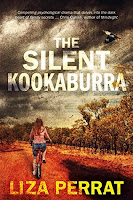
The Silent Kookaburra by Liza Perrat

SUMMARY (from Goodreads): All eleven-year-old Tanya Randall wants is a happy family. But Mum does nothing besides housework, Dad’s always down the pub and Nanna Purvis moans at everyone except her dog. Then Shelley arrives – the miracle baby who fuses the Randall family in love for their little gumnut blossom.

Tanya’s life gets even better when she meets an uncle she didn’t know she had. He tells her she’s beautiful and could be a model. Her family refuses to talk about him. But that’s okay, it’s their little secret.

Then one blistering summer day tragedy strikes, and the surrounding mystery and suspicion tear apart this fragile family web.

MY THOUGHTS:

The beginning felt a little slow, but that later on proved necessary as it provided the fine cues for the rest of the story.

I was initially wary of the first person POV. However, Liza Perrat manages to pull off the 11-year-old’s language and rationale with great authenticity and without impoverishing the story. Quite the contrary, the style imbued with local linguistic flavour only enriches it.

While Tanya’s uncle was the sort of a bad person that made me root for the mobsters to take him out, I couldn’t help myself thinking that had he received some help and support, he might not have become what he had. The victim-turned-perpetrator stereotype doesn’t sit well with me: some victims do turn out just like their abusers, but it is not inevitable if the people close to the victims and the society at large offer them proper help.

I loved how in The Silent Kookaburra Perrat seamlessly and with great insight incorporates a number of issues which are still current (or which are, really, current in every age.) These range from poverty, domestic violence, depression, loss of a child, alcoholism, superstition and prejudice against immigrants and people of other religions, and probably some more that I forgot about.

Tanya herself has a lot on her plate, dealing with alienated parents (from each other and the children), bullying, low self-esteem, having to grow-up early, and being the target of the mysterious uncle who says all the right things to make her feel good but has nefarious intentions towards her.

In several ways, I could relate to Tanya, and Liza Perrat captured her struggles in a very genuine manner that truly resonated with me.

At the end of the story, one of the main mysteries of the book remained unresolved. But that is just life; we don’t always get all the answers.

And finally, I loved that Tanya got her happy ending, albeit it was a bit clichéd, and that certain prejudices were overcome for the good of everyone involved.

RECOMMENDATION: The Silent Kookaburra is an incredibly rich story set at the beginning of the era I would consider ‘modern’ that provides a wealth of food-for-thought for everyone not afraid to dig into some, perhaps uncomfortable, but still very current and important issues, and is, therefore, a very compelling read.


The author has sent me a free copy of The Silent Kookaburra in exchange for an honest and unbiased review. 

Friday, April 17, 2015

The Tenth Circle by Jodi Picoult


Review:

The Tenth Circle - Jodi Picoult
In The Tenth Circle, Jodi Picoult deals with another universally topical issue - rape, focusing the story around 14-year-old Trixie Stone, whom her ex-boyfriend rapes at a party, and the Stones' struggle with the aftermath of it.

Now, the book starts a little on the slow side, which prompted me to do what I do very rarely: I skipped a few chapters and read a little ahead, and what I read made me so angry I almost didn't finish the book.

SPOILER ahead. At some point it seems as if Trixie lied about being raped and it made me furious that Picoult would perpetuate such an awful stereotype: that women lie about it out of spite or vengeance of shame of whatever, because this is the very thing why rape survivors are afraid of coming forward and reporting it and why, even when they do, so few rapist are actually convicted and/or spend time in jail. END of SPOILER.

However, I refused to believe Picoult would go for such a low move, so I went back and read the whole thing and I am glad I did, for The Tenth Circle offers a great insight into working of rape culture we live with, where rape survivors' every word and action get questioned while the perpetrators are protected by the innocent-until-proved-guilty principle.

In Trixie's case, the matter of consent is especially glaring, since she was raped while intoxicated and drugged, and it speaks volumes about male entitlement that her rapist and the majority of people who witnessed her behaviour prior to rape, never realise that impaired judgement means inability to give consent. Disgustingly, they argue just the opposite: that due to her impaired judgement she was unable to refuse consent. And that sort of attitude is very much prevalent in the world, which is truly horrifying.

Along Trixie's struggle with what happened, we also follow her father, a comic book artist, who is making every effort to help and protect her, while plagued by the memories of his origins, both beautifully interwoven with the making of his newest project, and her mother, a university professor, facing the repercussions of her infidelity and revealing the caused that led to it, mixed with her reflections upon Dante's Inferno.

Thus, The Tenth Circle tells a compelling and emotional story that gives the reader plenty of food for thought.

Cross-posted from BookLikes.

Friday, February 06, 2015

Vanishing Acts by Jodi Picoult

vanishing actsSUMMARY (from Goodreads): Della Hopkins has led a charmed life. Raised in rural New Hampshire by her widowed father, she now has a young daughter, a handsome fiancé, and a job she loves, finding missing persons. However, she is plagued by flashbacks of a life she can't recall. Then she discovers that her father had kidnapped her when she was a child.

MY OPINION:

As always, it is hardest to review the books one likes, and since it has been a while since I read this, I will do this the short way.

Things I liked about Vanishing Acts:

  • all five POVs – the combination worked perfectly together and made an amazing story;
  • the insight into prison system/life, however harsh it was – it felt much more realistic than in most books;
  • the parallels between Delia and her daughter Sophie and between Delia’s family and Sophie’s;
  • the subplots fit in very well;
  • and, finally, this is how you do love ‘triangles’, subtly in the background.

I cannot think of anything I didn’t like about this book.

All in all, Vanishing Acts was an absolutely heartfelt story not only about the kidnapping as its main focus, but also many other present everyday issues everyone could or might be facing already. 5 stars

RECOMMENDATION: Jodi Picoult’s books are excellent for those interested in a thought-provoking material about contemporary issues and Vanishing Acts is no exception.

Wednesday, September 26, 2012

Second Glance by Jodi Picoult


820226SUMMARY (from Goodreads): From the moment Ross's fiancée Aimee was killed in a car accident, he's been trying to die too. But life won't let him go. His only hope now is that Aimee will come to him.

So when he hears of strange happenings at an ancient Indian burial ground near his sister's home, he heads to Comtosook, desperate for the rumours of a haunting to be true.

What he finds there is not Aimee's ghost, but Lia, a very real woman whose life is filled with as many troubled secrets as his own

MY OPINION:

The main topic in Second Glance revolves around the questions of what makes a life worth living, what kind of life is a good life, and who defines that. It also questions the perception of an individual about what is real and what is not, and, finally, shows how people with seemingly no connection whatsoever may influence each other's lives.

The American eugenics' movement of the 1920s and 1930s plays a big role in Second Glance. Prior to reading this book I had not even heard of the eugenics and their 'program for the betterment of human race' which included 'voluntary' sterilization to prevent carrying on undesirable traits, such as 'immorality', 'feeblemindedness', etc. I was shocked to learn about it and the fact that the Nazis' plans for racial hygiene were actually based on the ideas of the American eugenics.

The worst thing about it was that these people did not think they were doing anything bad. They really believed that they were good people trying to do the best thing for humanity. To me what is the most horrible is their belief that they wanted a certain kind of people gone not because they hated them but because they thought it was for the greater good.

The centre point of the novel is a seventy years old murder case reopened due to the sale of a piece of land claimed to be a burial ground of the Abenaki tribe on the skirts of a small haunted Vermont town. This is what ties ten main characters who each tell parts of the story from their point of view. Despite so many characters and point of views, the novel reads smoothly as the transitions between different POVs are natural and placed in all the right spots.

Each of the characters is multi-layered, telling their own story of success, failure, and self-discovery. From Ross – a man longing for something he thinks life cannot give him, his sister Shelby – a single mother living solely for her child, Ethan – a kid with a rare disease which dooms him to almost never seeing the sunlight, to Eli – a cop who had tried to push his roots to the back of his mind, and even Spencer Pike – the antagonist of the novel who realises his errors too late to repent, all of the characters present their views upon life, so very different and yet so similar in some parts.

There is quite some science involved in the novel, and since I am not really a science person, I really appreciated that Picoult explained all the medical, forensic and genetic things in a comprehensive, science-for-dummies kind of  way.

At last, I have to mention the absolutely brilliant writing. I mean, this book is quotable in its entirety.

Overall, in Second Glance, Jodi Picoult presents a story about how the past influences the present and how a person's actions influence the lives of others. I loved how she intertwined the stories of a number of characters both from present an the past into a single beautiful emotional story.

RECOMMENDATION: Second Glance is a book that will stay with me for a long time, I think. It is a wonderful, thought-provoking mix of mystery concerning both the present and the past, entwined with a couple of beautiful, although not always happy, love stories. If you like a complex, well-written read which makes you think and feel and want to learn, I certainly recommend Second Glance.

Wednesday, July 18, 2012

Fast Women by Jennifer Crusie


SUMMARY
(from Goodreads): When a down-on-her-luck divorcee meets a determined-to-dominate detective, they find out that falling in love can be murder...

Nell Dysart's in trouble. Weighed down by an inexplicable divorce and a loss of appetite for everything, Nell is sleepwalking through life until her best friend finagles a job for her with a shabby little detective agency that has lots of potential and a boss who looks easy to manage.

Gabe McKenna isn't doing too well, either. His detective agency is wasting time on a blackmail case, his partner has decided he hates watching cheating spouses for money, and his ex-wife has just dumped him...again. The only thing that's going his way is that his new secretary looks efficient, boring, and biddable.

But looks can be deceiving and soon Nell and Gabe are squaring off over embezzlement, business cards, vandalism, dog-napping, blackmail, Chinese food, unprofessional sex, and really ugly office furniture, all of which turn out to be the least of their problems. Because soon, somebody starts killing people. And shortly after that, they start falling in love...

MY OPINION:

This is actually a fun read. It has a bit of a snarky tone, and I laughed a lot during reading it. Additionally, some suspenseful elements kept my attention throughout the book.

Unfortunately, the writing is somewhat messy, so I had to pause occasionally and go back to figure out who was talking to whom and the like. There are also some things that do not add up, which furthermore contributes to the confusion.

The strongest point of the book is the portrayal the relationship between Nell and her friends. I liked it how they stick together through thick and thin, supporting each other and having fun together.

Overall, Fast Women is a quick and easy, but captivating, book. A somewhat confusing writing, which disturbs the smoothness of the reading process, is the reason for me rating it three instead of four stars.

RECOMMENDATION: Fast Women is a light and funny contemporary romance with a dash of suspense.

Monday, May 21, 2012

I, Lucifer by Glen Duncan


SUMMARY
(from Goodreads): The Prince of Darkness has been given one last shot at redemption, provided he can live out a reasonably blameless life on earth. Highly sceptical, naturally, the Old Dealmaker negotiates a trial period - a summer holiday in a human body, with all the delights of the flesh.

The body, however, turns out to be that of Declan Gunn, a depressed writer living in Clerkenwell, interrupted in his bath mid-suicide. Ever the opportunist, and with his main scheme bubbling in the background, Luce takes the chance to tap out a few thoughts - to straighten the biblical record, to celebrate his favourite achievements, to let us know just what it's like being him.

Neither living nor explaining turns out to be as easy as it looks. Beset by distractions, miscalculations and all the natural shocks that flesh is heir to, the Father of Lies slowly begins to learn what it's like being us.

MY OPINION:

Glen Duncan definitely deserves credit for having the courage to approach such a controversial topic as telling the Lucifer's side of story. However, the story he tells is a story no man can actually tell, therefore, it comes out nothing if predictable. Nevertheless, Duncan's attempt at it is a good one.

It is clear that Duncan did his research for I, Lucifer, which heavily relies on The Bible. Hence, Duncan's version of Lucifer's tale can be logically deduced from the Christian tradition. From the Fall to the seduction of Eve and the Crucifixion, Lucifer's version of events makes perfect sense in relation to what had already been written about numerous times. An interesting part to me was the similarity of Duncan's re-telling of the Lucifer's Fall to Tolkien's version of creation in The Silmarillion.

The writing style is accommodated to suit the presumed Lucifer's personality: nonchalant, sarcastic, and haughty. However, the initially intriguing trying-to-be-smart wording and snarky remarks eventually get old and tiresome. Also,  constant digressions get in the way of smooth reading a lot.

All in all, I, Lucifer is nothing new or surprising content-wise. Actually, there is not much of the story, as the emphasis is on the telling itself. This, combined with oh-I'm-so-smart-and-snarky style, makes the book boring in places.

RECOMMENDATION: I do not really know whom to recommend this book to. I presume the various Christian churches would call it blasphemous, although its content is basically in concordance with the Bible. You might be interested in I, Lucifer if you want to read something which would make you think about the nature of humankind, religion, and the concepts of good and evil.

Monday, November 28, 2011

The Good Man Jesus and the Scoundrel Christ by Philip Pullman


The Good Man Jesus and the Scoundrel ChristSUMMARY: (from Goodreads): Part novel, part history, part fairytale, The Good Man Jesus and the Scoundrel Christ offers a radical new take on the myths and the mysteries of the Gospels, and the genesis of church that has so shaped the course of the last two millennia. With all the magic for which Pullman's storytelling is famed, this provocative and thoughtful new book from one of Britain's best loved writers promises to be the highest profile yet in Canongate's acclaimed Myths Series.

MY OPINION:

This book is an example of a unique approach to presenting the author’s view on Christianity and the Catholic Church. Philip Pullman, a self-proclaimed atheist, presents his view on the ideas of Christianity - the good side, illustrated in the character of Jesus, whereas the character of Christ represents the Catholic Church - clearly presenting the bad side.

As a Christian, I find it difficult to say anything specific about this book without explaining my religious beliefs. However, a book review is not a place for such a thing. Therefore, I will just say that The Good Man Jesus and the Scoundrel Christ deserves recognition for its originality and the author's knowledge on the subject. Hence, I rate it **A LITTLE STRANGE due to its language and creativity. The content is on my opinion impossible to rate, since the book deals with a complex issue resolvable only by everyone on their own, or not even that.

This book is a highly provocative and thought-provoking read. It asks a lot of questions and tests the readers’ beliefs. It is the kind of book that demands an open mind and must be taken with (more than) a grain of salt. 

RECOMMENDATION: This is a not a book for people who are easily offended or not ready to put their beliefs to a test.

Wednesday, October 12, 2011

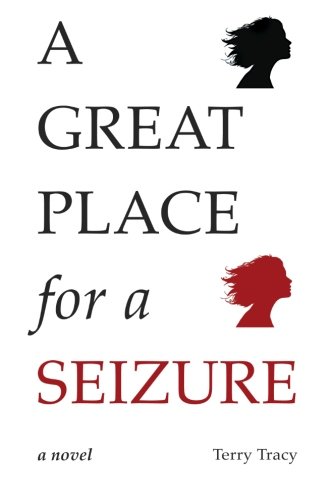
A Great Place for a Seizure by Terry Tracy


A Great Place for a SeizureSUMMARY (from Goodreads): Mischa Dunn's family flees Chile in the wake of the 1973 coup d’état that installs a military dictatorship. She settles comfortably in her newly adopted country, the United States, until one day, an unexplained seizure in a library signals the beginning of her life with epilepsy. With an engaging balance of humor, insight, and sensitivity Mischa draws the reader into a vivid tale that travels across three continents over thirty years.

MY OPINION:

A Great Place for a Seizure tells us a fictional life-story of an epileptic. However, this book is much more than just that, as it introduces the reader to places, people and cultures halfway across the globe, from Chile to the States, Guatemala, and United Kingdom.

Though numerous topics are interesting, the transitions between them are sometimes jumpy and therefore confusing. Tracy’s writing is in some places matter-of-factly, and medical explanations are tedious, although educational, on some spots. There are some grammatical mistakes; however, they do not interfere with reading. The strongest point of Tracy’s writing is her exploration of emotions and mentality of the main protagonist.

Misha is an admirable character for her clear-headed personality and strength. She insists upon not letting her medical condition dictate the way she lives or hinder what she can accomplish. I can relate to Misha in regard to her experience with doctors. I have a great respect for many good, caring and devoted doctors. Yet, I am also familiar with doctors who treat patients as machines in need of repair, writing prescription and recommending surgeries without giving the patient a say, such doctors as Misha encounters many times.

I did not care much for Hector, Misha’s husband, at first, mainly because he and his relationship with Misha are underrepresented initially – their meeting and forming a life together is simply stated as a series of facts, which results in the lack of emotional involvement on the part of the reader. However, that changes when the author shows Hector standing up for Misha towards the end of the book and finally lets the reader into his mind. I liked that Hector very much and I just wish he had been better portrayed from the beginning.

On the whole, A Great Place for a Seizure is a good testimony of how a person should not be discouraged by a medical condition and should aspire to live a full life.

RECOMMENDATION: Despite a few of my complaints, I think this is a book everyone could benefit from, as the reader may learn something about the people living, not only with epilepsy, but with any kind of medical condition.


Thanks to the author for sending me a copy of the book in exchange for an honest and unbiased review. 

Wednesday, February 23, 2011

The Time Traveler’s Wife by Audrey Niffenegger

A Mulher do Viajante no TempoSUMMARY (from Goodreads): When Henry meets Clare, he is twenty-eight and she is twenty. Henry has never met Clare before; Clare has known Henry since she was six. Impossible but true, because Henry finds himself periodically displaced in time, pulled to moments of emotional gravity from his life, past and future.

MY OPINION:

I have seen the film before I read The Time Traveler’s Wife. I had been postponing reading the book for a long time, because I had thought it would be boring since I had already known what happened. Naturally, reading the book was worthwhile and not at all boring.

Although the book is sometimes sadder and gorier than the film, it is more enjoyable because it offers you time to process things. And processing is indeed needed. The concept of time travelling is very confusing, nonetheless Niffenegger deals with it in such a manner it makes sense. The reading can be difficult on some spots and you might stop a couple of times to think things through, but in the end everything works out.

I also liked how Henry and Clare alternate to tell their story. It is often argued that re-telling the same event from the point of view of several characters is redundant. I usually agree with this. However, in this case, it is sometimes necessary and I believe Niffenegger uses just the right amount of this technique in all the right places.

The best thing about The Time Traveler’s Wife is that, in spite of such unreal problem as time travelling, Niffenegger makes the plot as well as the characters realistic. Henry and Clare have to face the same issues as any “normal” couple. They disagree, they fight, they suffer, and then they make up, laugh, dance, and are happy. They work hard for their love and this makes it extraordinary. 

RECOMMENDATION: The Time Traveler’s Wife is a wonderful story about true love which overcomes all obstacles. It requires some effort to understand the course of events, but it is what makes this book special. 

Thursday, November 04, 2010

La Cucina by Lily Prior

book cover of 

La Cucina 

A Novel of Rapture 

by

Lily PriorSUMMARY (by Fantastic fiction): La Cucina combines the sensuous pleasures of love and food, simmering in the heat of a Sicilian kitchen. Rosa Fiore is a solitary woman who has resigned herself to a loveless life, and expresses her passionate nature through her delicious cooking. Then, one day, she meets an enigmatic chef, known only as l'Inglese, whose research on the heritage of Sicilian cuisine leads him into Rosa's library and into her heart. They share one sublime summer of discovery, during which l'Inglese awakens the power of Rosa's sexuality, and together they reach new heights of culinary passion. When he vanishes unexpectedly, Rosa returns to her family's estate to grieve for her lost love only to find a new fulfilment, as well as many surprises, in the magic of her beloved cucina.

MY OPINION:

I rushed through this book as if I was running through the hail storm looking for safety. What a relief when it was over! This is one book I really did not like.

The promising title and summary are, as far as I am concerned, not justified by this book. I was bored reading it from the beginning to the end. The writer wants to tell a simple woman’s life and love story, but fails to create suspense. In an attempt to make the story more interesting, Prior introduces some elements of grotesque which eventually turn out just disgusting. I usually do not mind grotesque or disgusting, but in La Cucina it just comes out inappropriate and (still!) boring.

La cucina (the kitchen) is hardly worth mentioning. Prior does not succeed to present the Sicilian cuisine in an appealing way. In addition, in Prior’s book the kitchen as a place represents an unhealthy substitute for love. When Rosa is sad, lonely or scared, she finds escape in her kitchen, cooking and eating. It reminded me of modern anorexic and bulimic girls all the time.

Yet, there is one good thing about this book:  the style. Prior writes in a way a middle-aged, simple, rural, Italian woman would be telling the story by herself. Through the language I could imagine Rosa, her thinking and her feelings. That was the only reason I kept reading the book through the end.

RECOMMENDATION: Maybe it is just me who does not like this book, so if you generally are an easy cuisine-and-romance type of a reader, you might give it a try.

Monday, August 02, 2010

Tim by Colleen McCullough

TimSUMMARY (by the publisher): Mary Horton is content with her comfortable, solitary existence . . . until she meets Tim. A beautiful young man with the mind of a child -- a gentle outcast in a cruel, unbending world -- he illuminates the darkness of Mary's days with his boyish innocence. And he will shatter the lonely, middle-aged spinster's respectable, ordered life with a forbidden promise of a very special love.

MY OPINION:

Even nowadays, mental illness is still considered to be a taboo topic by many people. If nothing else, people feel uncomfortable talking about mentally challenged people just as they feel awkward being around them. Imagine how much more conspicuous people must have been about this topic in the mid 1970-s when there was a lot less known about mentally challenged  people. Nevertheless, Coleen McCullough courageously dealt with the topic in her first novel, Tim, published in 1974.

In her novel, McCullough portrays two very atypical characters. On one hand, there is Mary, an independent, self-sufficient, educated, successful and rich business woman in her forties. She is very strong on the outside, but she has enclosed herself from feeling any emotion and operates on a very rational level. She is an up-tight old maid who is very reserved. She doesn’t have friends and pays a lot of attention to propriety.

On the other side, there is Tim, a mentally challenged young man who cannot read. Yet, his condition still enables him to support himself by physical work in a small construction company. Tim is also, in Mary’s words, the most handsome man she has ever seen. His family is loving and supportive and they deal with him in the best way they can. However, they do not have either patience or knowledge to help him make the most of himself. His parents taught him to fear and avoid women in order to protect him from being exploited and hurt. Nevertheless, they cannot fully protect him from suffering. People make jokes in his presence and his colleagues play sometimes very dirty pranks on him, but Tim is not upset because of the jokes and the pranks. What makes him suffer is that he doesn’t understand the point.

When Mary meets Tim, she has no idea he is a mentally challenged person. Learning about his condition and seeing his extraordinarily handsome appearance makes her want to help him. Mary, being an educated woman, starts teaching him how to read and count and finds out that Tim is capable of understanding and thinking about much more than everybody else thinks. He only needs a lot of time and patience.

Just as Mary’s knowledge and reason help Tim make progress, Tim’s innocence and simplicity help Mary learn how to open up, smile and relax. As their bond grows stronger, some people around them are far from being understanding. Therefore, Mary is faced with a choice either to disappear completely from Tim’s life or find a solution best for Tim. McCullough thoroughly explores the pros and cons of either choice and finally shows the reader that if a person is open to possibilities, there is much more to life than you can imagine.

RECOMMENDATION: This is a wonderful novel about human nature and how there is strength in every person’s weakness. Read it if you want to see how strange, yet simple, paths can life take.

Monday, July 26, 2010

Grace and Truth by Jennifer Johnston

SUMMARY (by goodreads): Sally, an actress, has just returned from a long European tour to her house in Goatstown, and looks forward eagerly to seeing her husband, Charlie, again. When Charlie announces that he's leaving her, Sally, devastated and furious, makes him pack his bags at once. But maybe, she wonders later, she really is too hard to live with? Weighed down by the unspoken secrets of two generations, and hoping for some glimmer of comfort, Sally turns to her grandfather, the frosty old Bishop she has never really known.

MY OPINION:

Sally is a neurotic actress, who is despite her professional success an unhappy person. She is eternally restless and at the same time “whacked” because she feels as if she was only half of a human due to her unknown father. She doesn’t understand the motives for her mother’s silence about her father and her depression which led to her suicide. Sally is deeply burdened by the secrets she doesn’t know, by having practically no family and by uneasy relationship to her only relative, an old Church of Ireland Bishop, her grandfather.

Nevertheless, Sally is, just as her mother in the past, unable to do anything about her feelings of alienation and unhappiness until her husband Charlie announces he is leaving her. This is a trigger which sets Sally on her way to a new life. She decides to visit her grandfather who spends his days writing memoirs about his honourable work. There relationship is loose and distant but, as their encounters become more frequent over a short period of a few weeks, it seems that they will overcome their awkward, reserved attitude towards each other.

Sally is surprised by finding out her grandfather closely follows her career and has seen many of her roles on stage. She discovers that he, too, had an aspiration to become an actor, but was not allowed to follow his dreams. A bond finally forms between them. Then he hands her a booklet of memoirs he was prompted to write by her renewed visits. These are only for her to read.

The Bishop’s memoires finally reveal the deepest family secrets Sally has always wanted to know. Now, she wishes she had never read the booklet. But only for a while. Because the truth brings her grace at last to find strength in herself. The truth enables Sally to forgive her mother for her silence. The truth makes it possible for Sally, just as well as for the reader, to see that the Bishop’s high and honourable attitude and all his work were just a cover-up for his many sins and unhappy soul. Therefore, upon Sally’s last visit to the dying Bishop she can part from him with forgiveness.

Johnston’s novel portrays the danger of overprotective and possessive parents who leave their children in ignorance. SPOILER: If the Bishop’s wife was more educated about the nature of marriage, she wouldn’t have been frigid and wouldn't have rejected her husband. If she hadn’t almost completely excluded the Bishop from their daughter Ruth’s life, he would have been able to be a father to her and I think it would have been much less likely for him to indulge into an incestuous relationship with Ruth. END OF SPOILER

In Grace and Truth the overprotective and controlling parents cause their children’s misery. Ignorance just adds to that misery. If Sally’s mother was strong enough to reveal the truth at least to Sally, Sally’s if no one else’s life would be a whole lot different and, I dare say, happier.

RECOMMENDATION: If you don’t mind drawing conclusions and searching for the meaning underneath what is written by yourself, this is the book for you.