Showing posts with label Fantasy. Show all posts

Sunday, August 22, 2021

Becoming Crone (The Crone Wars #1) by Lydia M. Hawke

A cover of Becoming Crone showing an older woman with shoulder-length silver hair in jeans and a long-sleeved blue top, her arms crossed over her chest. She's illuminated by white-blue light from behind. On her left, a large crow flies above her and there are many smaller ones in the air. There are fir trees in the background
Becoming Crone deserves 5 stars for getting me out of reading slump alone, because this year has not been my reading year at all, but this story managed to keep my interest.

Starting with a refreshing concept where the main protagonist is a 60 year-old grandma who suddenly comes into her power as a witch - or, a Crone and continuing with assembling a cast of mismatched, quirky characters (and a cat), it follows Claire through discovery and acceptance of her new reality without a boring moment, from funny to scary and heart-wrenching ones.

I very much appreciated the real, tangible stakes and consequences, from the magic's impact on the real world to inflicted injuries that do not magically disappear.

And with the way it ended and my trust in the author, I one-clicked the sequel pre-order without a second thought. 

Saturday, October 27, 2018

Beren and Lúthien by J. R. R. Tolkien

The story of Beren and Lúthien is one of the three central stories of Tolkien’s Elvish history, presented in this book in a new light, revealing the process of Tokien’s writing and how it evolved from its earliest concept to the latest, though never quite finished version.

Edited by Christopher Tolkien, Beren and Lúthien is actually a collection of various versions, accompanied with a commentary on their conception and development and the reasoning behind it, following by now a familiar approach when it comes to Tolkien’s posthumously published works.

As such, it comes out rather academic – perhaps overly so – to a reader only interested in a ‘story’.

However, I found Beren and Lúthien extremely readable and even refreshing and I loved rediscovering the already familiar story from The Silmarillion with its different and new angles through both in prose and verse. Although Tolkien’s poetry does at times seem awkward, it is in most places highly evocative and yet again shows Tolkien’s skill. The latest written verses in particularly make you think about what he could have done if he had had more time.

I was, nevertheless, a little ‘disappointed’ to learn that Tolkien was apparently not a cat person (just kidding, LOL.)

All in all, Beren and Lúthien was an enjoyable and quick read that only rekindled my love for all things Tolkien.

Thursday, March 08, 2018

Pet (Captive Prince short stories #4) by C. S. Pacat

Note: This review contains SPOILERS.

SUMMARY (from Goodreads): Pet follows the rise of Ancel at the poisonous court of Vere. Set during the events of Captive Prince.

MY THOUGHTS: 

Pet turned out to be one of those why-haven't-I-read-it-sooner books for me, because I wasn't particularly interested in Ancel, but I should have known better.

Not only did C. S. Pacat ruin me with Laurent/Damen feels despite them appearing in the story only in that single horrible scene (you know which one) yet again but also managed to make me feel for Ancel.

On first impression, Ancel appears to be driven by ruthless ambition alone, but beyond that it is survival itself that drives Ancel to master selling himself in order to climb the social ladder to the top; and who can blame him for that? The path is, however, paradoxical, because the higher one gets in the Veretian society and the more means for a (luxurious) living one obtains, the more one's very life is in danger.

In addition to the familiar atmosphere of intrigue, we see through Ancel's eyes how ingrained the oppressive concept of 'pets' is in pets themselves, most notably at his utter disdain for Erasmus and his predicament/distress, which with only his own experience to judge the matters by makes perfect sense (despite, obviously, being wrong.)

I really liked Berenger's character and the somewhat surprising tones of the relationship between Ancel and Berenger.

And finally, I loved the ending for the rather unexpected positive turn that looks into a hopeful (hopefully!) future, knowing the path of the main series. But at the same time I am also a bit mad/sad/frustrated that this is The. End. Darn.

Saturday, September 02, 2017

The Cold King by Amber Jaeger

Note: This review contains SPOILERS.

At first, this was so bad that it was sort of entertaining.

We have a Cinderella-meets-the-Beauty-and the-Beast-with-a-hint-of-the-Phantom-of-the-Opera-like story that reads like terrible BDSM, just without sex (which actually makes it worse), but with a generous dash of brainwashing.

The male protagonist (aka the villain, I am certainly not calling him a hero) is a sadistic and manipulative asshole, who throws the female protagonist in a dungeon to make the transition from her old life to the new one ‘easier’ – for him, of course. After all, it is much easier to brainwash someone to accept common human decency and having one’s basic needs met as luxury if one has only ever been shown cruelty – though, as they say, the absence of cruelty is not the same as kindness – than win them over by treating them right from the beginning.  

The cold king is a typical abuser, targeting the weak and isolated and tearing them down before building them back up to his own desires by making them completely dependent on him, all of which he justifies as improving their lives and showering them in luxury they could never experience otherwise.

Even Calia recognises that as shitty but falls for it hook, line, and sinker, as does everyone else – who, by the way, does nothing to help her at least with good advice. But, after all, that is neither Calia’s nor the others’ fault, since they are all victims and Calia with her reasoning the most typical of them all.

The cold king is supposed to be a tortured hero, but even if his pain is understandable, it doesn’t excuse his behaviour. I couldn’t feel even remotely sorry for him or his predicament for being cursed (with the curse of his own doing.) He also has a giant ego, and naturally, as people of his kind do, knows better what is best for Calia and others then they do themselves.

Calia herself is an ‘extreme Cinderella’, ignored and disliked by everyone, including her horrible, abusive, and neglectful mother. Her poor fortune and suffering (in comparison to everything else, all her crying was the least of a bother) is exaggerated to the maximum in order to garner sympathy. Needless to say, it didn’t work for me.

She is also quite a bit of a Mary Sue, suddenly becoming pretty (no, hair growth does not work like that!), graceful, and smart (she learns to read very fast, knows things she had nowhere to learn (such as doing cuff-links), passes sound judgements, etc.), except, of course, for her own situation.

All of the above perpetuates the terrible message that if a woman suffers quietly through abuse, accepts her lot in life, and moulds herself completely to the abuser’s wishers, she will get her fairy-tale ending.

Because, of course, in the end the male protagonist falls in love with her (which also undoes the curse, duh!) and learns the error of his ways and changes for the better and treats her like a queen (literally) – which doesn’t happen in real life.

Calia only develops a bit of a spine towards the end, but only because she is hurting by her love not being requited, and not, you know, because of all other terrible things the cold king has done to her.

The book only gets worse after the half-way mark when we suddenly get multiple, jumping POVs, including the omniscient POV (either that or Calia becomes telephathic), and every ridiculous romance (but not romantic) cliché in existence is used and abused for the contrived quasi-love story.

With putting Calia in the role of a personal servant – who basically does what a valet would – and other characters’ occupations, Jaeger tried to subvert gender roles, which would be commendable, but fell flat due to the characterization which was unflattering in Calia’s case and virtually non-existent in other characters who were mostly bland and one-dimensional.

Add to this an attempt of ‘progressiveness’ by having the cold king be accepting of a same-sex couple, except that it was poorly executed, since kindly ‘overlooking’ their ‘friendship’ is not exactly the same as not being homophobic.

I won’t even go into all the inconsistencies within the story. For example, the setting is undecided on whether to be steampunk-ish with some ‘high’ tech, such as a likeness of modern plumbing and the use of diamonds for industry and craft, or one of a pre-industrial impoverished agricultural society.

Perhaps indecisiveness is at the core of this book’s problems. The blurb says that “… Not every Beast is a prince charming at heart and not every Beauty is a maiden just waiting for love…” and perhaps the author wanted to be edgy and actually re-tell The Beauty and the Beast as a story about abuse, but failed at it, because the end result is something that goes back and forth between trying to be just that (mostly) and a classic HEA fairy-tale but ending up as a horrible mess instead.

Overall, by the end of the book, I wasn’t entertained by the bad-ness of it anymore, only disgusted. 

Monday, May 08, 2017

The Adventures of Charls, the Veretian Cloth Merchant (Captive Prince short stories #3) by C. S. Pacat

SUMMARY (from Goodreads): The Adventures of Charls follows the dealings of a humble cloth merchant in the days before the royal Ascension. Set after the events of Kings Rising and The Summer Palace.

MY THOUGHTS:

I am only taking away a star because of that abrupt ending. I need Charls's reaction when he figures it out, damn it! And, well, Damen’s or Laurent’s POV would be immensely more welcome. Although, I can well imagine our beloved kings had fun trolling Charls behind his back the entire time.

I pretty much loved everything, from all the undercover shenanigans to Laurent totally being ‘chaotic good’ and the mention of the cuff (I assume Laurent is still wearing his, too) to all the glimpses into Damen and Laurent from Charls’s POV.

Seeing the events and characters through Charls’s eyes was definitely entertaining as he is very perceptive in some ways (and I loved his loyalty and concern for both Laurent and Damen, I mean, Lamen), but his wit fails him in certain aspects and leaves him terribly (but adorably) oblivious.

All in all, The Adventures of Charls, the Veretian Cloth Merchant made me laugh and smile and still does even days after reading it, and was a great addition to the Captive Prince universe.


Monday, January 16, 2017

The Summer Palace (Captive Prince short stories #2) by C. S. Pacat

The Summer Palace is a short story that serves as an epilogue to Kings Rising, with Damen and Laurent meeting at the summer palace for a well-deserved respite from trying to consolidate their positions and secure the future of their people.

The story of their reunion is a triple wonder as it offers glimpses into the aftermath of the final events of Kings Rising while allowing Damen and Laurent to finally enjoy their time together and at the same time process – with each other’s help – some of the hardest parts of their past.

(Except for one; but I think it was the right choice of the author not to cramp everything into such a short story and leave that out, either for some future story or for the readers’ own imagination, not to mention that dealing with everything in the span of one evening would have been too much for the characters, as well.)

As such, The Summer Palace is utterly touching; it made me both laugh and shed a tear. I didn’t think that I could love these two fictional characters more than I already had, but after this story, I do. I so do.

And against such beauty, I cannot possibly hold a few missed typos against the author, so all five stars it is, because all in all, The Summer Palace was brilliant, better than I could have ever imagined.

Monday, November 28, 2016

Green but for a Season (Captive Prince short stories #1) by C. S. Pacat

Green but for a Season is a Captive Prince short story about the relationship between Jord and Aimeric, set during the events of Prince’s Gambit. Or so the summary says, but it is actually mostly about Jord and less about Aimeric or their relationship, although that worked just as well for me.

Anyway, I had taken a glance at a few spoilers, so I thought I knew what to expect, but I wasn’t ready for this. So many Laurent feels!

Because, while Green but for a Season takes on Jord’s way into Prince’s Guard and his perception of the goings-on around him, we get to see the beginnings of Laurent’s struggle against the Regent. Through Jord’s eyes we witness the (re)formation of the Prince’s Guard and its struggles: Laurent gaining his men’s loyalty by first and foremost showing them his loyalty, the Regent’s attempts to sabotage him and nick his succession in the bud (and now we know why!), and Laurent’s perpetually astonishing foresight and character.

The red-line of the story, Jord’s and Aimeric’s relationship, falls from the forefront into the background while Jord reflects on the differences between aristocrats and commoners that make him wary of Aimeric interest. Thus, their relationship’s advancement is subtle, but fittingly so, and ends on a note where the reader can garner the rest from Prince’s Gambit, so Pacat does not need to repeat parts of the story, which is just another plus.

I feel like I shouldn’t write too long a review for such a short story, so I will stop here by saying that Green but for a Season is a delightful addition to the series and another gem in the already beloved world of the Captive Prince.


Sunday, November 20, 2016

Kings Rising (The Captive Prince #3) by C. S. Pacat

Note: The book reviewed contains themes only appropriate for those over the age of 18.

With Damen’s identity revealed, he and Laurent must now face their usurpers while their fragile alliance is put to test by themselves, their allies, and their enemies.

I was very happy to discover that I had been right about one thing. And very unhappy that I also called the second thing, which… makes the Regent an (even more than you thought) utterly despicable character. Poor Laurent.

There really is nothing more to say that I haven’t said in my reviews of the first two books. In Kings Rising, Pacat continues to beautifully develop the characters and their relationships amidst the turmoil of political plots.

I loved seeing how far Damen and Laurent have come from the beginning, becoming their better selves with each other’s help: Laurent opening up and learning to trust, and Damen learning to play dirty (so to speak) and cunningly; and still they both remain themselves, only stronger. But mostly, I loved how much they were willing to do for each other, including sacrificing their lives for the other.

Again, I loved how the other characters were incorporated in the story that took some unpredictable turns. The ending was perhaps a little rushed, but fitting and satisfying: as the fight against their usurpers got more and more personal, it felt right that the epic battles of the second book were replaced with (much) smaller-scaled ones, but with much bigger stakes for both protagonists.

Here, at the end of the series, I want to say a word about the writing, which does suffer from a few mishaps and one or two inconsistencies.

However, considering how fast I read the series (Kings Rising only took me a day and a half!), unable to put the books down once I started them, I can say those didn’t take anything away from the overall enjoyment of the story and its overwhelming emotional impact (I admit, I’ve slammed the five stars button on an emotional high), especially in lieu of the otherwise often exquisite style that only enhances the beauty of this story. And all that more than warrants not retracting a star from my rating.

Finally, I hear there will be short stories. Actually, one already exists and I bribed myself to write this review by promising myself Green But for a Season as a reward. Which I will get to, shortly. :)

Wednesday, November 16, 2016

Prince’s Gambit (The Captive Prince #2) by C. S. Pacat

Note: The book reviewed contains themes only appropriate for those over the age of 18.

I only needed three days to read a book! Well, that says everything.

In Prince’s Gambit, Damen and Laurent travel to the border with Akielos to deal with the ever-lasting border disputes, facing adversaries and obstacles every step of the way.

The plot is full of surprises and suspense, brought on by ongoing political intrigues, and there is never a dull moment. Together with the setting, it makes up an incredibly rich story.

At the heart of the book are the characters, Damen and Laurent, getting to know and respect each other (and getting hot for each other.) All that while trying to stay alive, prevent a war, and unmask a conspiracy.

The characterisation is absolutely astonishing, the character development so well done for both characters, both starting from the opposite ends and revealing layers under layers… and it made me love both of them so, so much.

It is hard to say anything specific without spoilers, so I won’t. Except perhaps that I can’t with the brilliance of Laurent, who is clever and cunning and always not ten but twenty steps ahead of everyone else. Also, my heart breaks for him, because I think his Uncle/Regent might have at least tried something with him. Ouch.

Through the course of the book we can see how Laurent and Damen are not so different after all – above all, they are both honourable – and where they are, those differences are complementary.
They both come so far from the beginning, learning things about one another’s people and cultures, and changing in the process.

I liked that Damen is an imperfect hero, that he isn’t flawless, that he realises his own faulty preconceptions and youthful mistakes and learns better.

I see people asking where do other people (like me) see all of the above. I think it is because, simply reading doesn’t suffice: the series is not the kind of read you switch the brain off with and have a bit of a rest; on the contrary, you have to shift your brain into a higher gear and put in some effort.

However, C. S. Pacat’s writing reveals so much more than what is on the surface to someone who looks: the top layer is of course Damen’s limited, subjective POV, but underneath – between the lines, if you want – Pacat hides a veritable treasure of information.

One thing that shows that is, for example, the titles alone. Captive Prince and Prince’s Gambit superficially imply Damen as the prince in question, but I think the titles actually allude to both characters. For Laurent, too, is a captive to the Regent, and in the second book, there is not only Damen’s gambit for freedom, but also Laurent’s for his life and throne.

Like, I said, brilliant.

The last three chapters slayed me. I have nothing more to say. On to Kings Rising it is.


Friday, November 11, 2016

Captive Prince (The Captive Prince #1) by C. S. Pacat

Captive Prince Cover
Note: The book reviewed contains themes only appropriate for those over the age of 18.

Controversy, criticism, and calls for censorship (!) are a sure-fire way to make me read something so I can form my own opinion. I heard of Captive Prince a while back from a friend who thought it would be to my liking, but I forgot about it until I stumbled upon some heated debate over it on tumblr, and then I had to read it.

And am I glad I did!

So, Captive Prince tells a captivating (pun intended) story about Damen, the prince and heir to the throne of Akielos, whose bastard brother usurps his place, makes him a slave, and sends him as a gift to the prince of the enemy kingdom of Vere.

I loved the stunning setting of the story, something akin to Ancient Greece meets early Renaissance France (but with extra debauchery), both cultures thinking of the other as barbaric, and yet not so different at all, despite some striking contrasts.

Slavery is a quintessential part of the world in the story and the theme that provokes the most controversy. We can all agree that slavery is an abominable concept, and as such, C. S. Pacat does a great job to present it as it is, unglorified and cruel, in particularly in Vere.

In Vere, being a slave is shameful; a slave is an object for other’s enjoyment, subjected to all kinds of mistreatment, beatings, rape. Lack of communication or miscommunication as a plot device normally irks me, but I liked how Pacat brilliantly uses it to make a point: a slave’s word in Vere is less than nothing, not even worth asking for (for the most part.)

Meanwhile, in Akielos, slavery is basically a profession, one a person is trained for, and is ascribed different levels of honour, although Veretians frown upon the way Akielos slaves are stripped of their own will. However, in Akielos, slavery is a trade-off: slaves’ perfect obedience in exchange for masters’ perfect treatment. (It is still wrong, though.)

In addition to the above, the detailed world-building of both cultures is fascinating in many other aspects, but I will leave it at that as to not spoil everything and move on.

Next, the characters are incredibly fleshed out, especially the main protagonists, both of whom I came to love by the end of the book (yes, Laurent, too.) The set-up for their story includes all of my favourite tropes: enemies to lovers (well, not yet), opposites attract, the hero and the (not really) villain.

If you are looking for romance, you will find very little of it in Captive Prince, least of all between the main protagonists, because this story is really a build-up to it. Nevertheless, you won’t be bored at all, for there is enough political and social intrigue, power-plays, engrossing interactions, and more to keep you in thrall to the last page.

All in all, I liked Captive Prince very much and I think that is all I can say as I wrap this up. Now, excuse me, I am in a hurry to start the second book in the trilogy. 


Wednesday, July 22, 2015

The Chronicles of Narnia: The Magician's Nephew by C. S. Lewis


Review:


The Complete Chronicles of Narnia (The Chronicles of Narnia) - C.S. Lewis, Pauline BaynesYay! I've finished the first book of The Chronicles of Narnia!

Actually, I own all the books in this giant beautifully illustrated volume, but since getting through all of it will take time, I decided to post my opinion after each book.

I have been planning to read The Chronicles of Narnia ever since the first film came out and I came across this volume for a ridiculously low price on Amazon at the same time, but I've been postponing reading it for the sheer weight and thickness of it being quite daunting.

Also, the only way to read it is for it to lie on a desk or a bed and I like to walk around the apartment while reading, stretching my legs during breaks between working on computer. Hence, I have started reading it a few times before but never got more than a few pages in. But now I have conquered it and read at least one book!

Anyway, to the book. The Magician's Nephew is a compelling introduction to The Chronicles of Narnia, giving the reader the insight into how travelling between worlds was discovered and the foundation of Narnia.

As a Tolkien buff, knowing of the close friendship between Lewis and Tolkien, I was on a special lookout for the similarities that I know there exist between their works. And, look, Narnia was created by Aslan's song, just like Ea was created by the song of the Ainur.

The characters of Polly and Diggory grew on me instantly, and I loved finding out the origin of the wardrobe and the reason for Narnia's affinity for being ruled by sons of Adam and daughters of Eve.

I loved the story-telling feel of the book with the narrator talking to the reader, which is pleasant both for the intended young audience as well as for an adult reader.

Overall, the first book of The Chronicles makes for a great start, and I am looking forward to reading the rest of them.

Originally posted on my Booklikes blog.

Thursday, January 15, 2015

Once Upon a Time in Wonderland (2013 – 2014)

OUAT-Wonderland-Title-CardCREATORS: Jane Espenson, Zack Estrin, Adam Horowitz, Edward Kitsis; CAST: Sophie Lowe, Michael Socha, Peter Gadiot…

SUMMARY: A spin-off of Once Upon a Time is based on Alice in Wonderland, but rather than retelling the story, it is cantered around a twist of its own. In Victorian England, nobody believe young Alice’s stories of her adventures in Wonderland. As she finds herself on the brink of a precarious decision with irreparable consequences, White Rabbit and Knave of hearts save her from a terrible fate and bring her back to Wonderland, where Alice sets on a new series of adventures, saving her friends, herself, and Wonderland itself.

MY THOUGHTS:

Firstly, let me admit that I haven’t read Alice in Wonderland yet (I still might in the future, though) – growing in a non-English speaking country, we read other, Slovene authors, as children.

This is one of the reasons, that although I have seen one or two film adaptations, and I have been watching Once Upon a Time (OUAT) since the beginning (although I only reviewed season 1) I have only caught up with Once Upon a Time in Wonderland (OUATIW) now, but I absolutely loved it, even more so that OUAT.

Here are the reasons why:

  • Alice. She is a wonderful heroine, a “strong female character” written as she should be: yes, she kicks ass, but she is not invulnerable, not masculinised as many so-called strong female characters are; she saves others but needs saving herself, too,  she accepts help when needed, she makes mistakes, and she breaks when everything is too much. But in the end, she comes out stronger and victorious. She is good hearted and selfless, but I loved that she fights for her own happiness, contrary to the cliché of a heroine only putting others’ happiness before hers.
  • Knave of Hearts. What a splendid male sidekick! Sassy and snarky (though, Alice is all that herself as well), and not always quite willing or capable to do what’s right, but the goodness inside him gets the better of him.
  • No love triangles drama. Almost no love drama, period. Far from the usual norm of contemporary television which focuses on romance, in OUATIW, love is in the centre of the story but is also just a part of it at the same time.
  • The villain(s). I loved the parallels the show draws of how differently life can take people who start with things in common: one may earn the error of their ways and try to do better while the other does not do so and suffers the consequences.
  • And all other characters and subplots. There is just so much good I cannot possibly mention everything.
  • Despite the fact that the show wasn’t renewed for a second season, the story is perfectly wrapped up in 13 episodes of its first and only season and everything is nicely tied up. No cliff-hangers or loose ends.
  • The fluff-tastic, but not corny, ending.

Finally, OUATIW does slightly overlap with its parent series (OUAT), but the references make sense even if you haven’t been watching OUAT.

Hence, there is no reason not to watch Once Upon a Time in Wonderland.

5 stars

RECOMMENDATION: I think OUAT and Alice in Wonderland fans as well as fantasy lovers in general will tremendously enjoy this series.

Friday, October 03, 2014

Deathless by Catherynne M. Valente

DeathlessSUMMARY (from Goodreads): A glorious retelling of the Russian folktale Marya Morevna and Koschei the Deathless, set in a mysterious version of St. Petersburg during the first half of the 20th century. A handsome young man arrives in St Petersburg at the house of Marya Morevna. He is Koschei, the Tsar of Life, and he is Marya's fate. For years she follows him in love and in war, and bears the scars. But eventually Marya returns to her birthplace - only to discover a starveling city, haunted by death. Deathless is a fierce story of life and death, love and power, old memories, deep myth and dark magic, set against the history of Russia in the twentieth century. It is, quite simply, unforgettable.

MY OPINION:

Deathless is quite a depressing book, in a way, but nonetheless a fantastic read.

The story is mainly set in St. Petersburg, the city with an ever-changing name, in one of the darkest (if not the darkest) periods of Russian history, spanning the time from the pre-Revolutionary era to the aftermath of the Second World War. That said, the plot takes the reader across Russia, to its farthest hidden corners, both the tangible and the intangible, in space and in time.

Catherynne M. Valente perfectly captures the Slavic soul – which may feel exotic to some people, but is so much a part of me – with its pessimistic worldview and a penchant for tragedy, finding beauty in dark things and sadness, interspersed with tiny bits of humour, or rather, typical sarcasm, even cynicism.

Valente combines myth and folklore with historical allusions, which stay almost unobtrusively in the background of the story. Between the lines one can discern insightful yet subtle social commentary/criticism, applicable both to historical and contemporary circumstances.

Everything is wrapped in a beautiful, highly metaphorical, yet easily readable language. The magic, myth and folklore at the forefront are, for one who wants to see beyond them, filled with an overwhelming symbolism, a study of humanity on the level of an individual and the society in general.

All that said, I have no idea why I had had the impression Deathless would be a YA book prior to reading it, for it is certainly not, at least in my opinion. It is, however, an amazing read, though dark, and I enjoyed it very much.

5 stars
RECOMMENDATION: If you love the darker side of myth, folklore, and humanity, Deathless could be an excellent read for you.

Wednesday, September 03, 2014

Loki by Mike Vasich

LokiSUMMARY (from Goodreads): God of Mischief. Father of Lies. Harbinger of Destruction. Exiled and tortured by the gods, Loki swears vengeance. He will summon the mighty Fenris Wolf and the legendary Midgard Serpent, and they will lead an army of giants and all the dead in Niflheim. Brimming with the power of the most destructive being in the Nine Worlds, he will not rest till Asgard is in ashes and all the gods are dead under his heel.

MY OPINION:

I enjoyed Vasich’s retelling of Norse myths with their entangled web of inevitability, for even though Odin, all-knowing as he is, can foresee the future events, he does nothing to stop them. On the contrary, he makes sure they come to pass.

While such behaviour is contradictory to every living creature’s inherent drive for self-preservation, this willing surrender to fate is, paradoxically, while a total renouncement of free will at the same time its ultimate embodiment and thus exactly what keeps the Norse gods alive, if only in myth.

Loki ends with a powerful message: that even in a total destruction, something may survive. Even more: that the destruction of old is necessary for something new, something better to be born. Hence, as the world of gods falls to ruin, a new world arises, a world of Men, in which, however, the old world is not forgotten, but lives on in the form of a myth.

Nevertheless, while all of the above is highly interesting and worth exploring, the writing in Loki was basically dry. Vasich writes from multiple characters’ POVs. However, he only seems to have a good grasp on one character, Loki, who truly comes alive trough his words, while the others appear rather mechanical, unable to provoke emotion in a reader.

Therefore, I must admit that after the first 40 pages and a few other sections further along the story, I more or less skimmed most of the book.

All in all, Loki does have some intriguing aspects, but the writing just wasn’t my cup of tea. Perhaps I should find another author for fictionalised Norse mythology.

2 stars

RECOMMENDATION: Loki is not actually a book about Loki, at least not for the most part. What it is is a basic retelling of Norse myths, and a rather dryly written at that.

Wednesday, June 04, 2014

Loki: Nine Naughty Tales of the Trickster by Mike Vasich

Loki: Nine Naughty Tales of the TricksterSUMMARY (from Goodreads): He is called the Trickster, the Sly One. For eons, he has manipulated and played the gods against each other. Now the time has come to go beyond petty schemes and seize the most powerful throne in existence.

Based on the classic tales, Mike Vasich breathes new life into the most complex god in the Norse mythos.

MY OPINION:

I probably should have read the book Loki by Mike Vasich first, before dabbling into this one, but I needed a short and easy read and this was exactly it.

I expected to get nine thematically related but not closely-knit short stories. However, the nine stories in this book from some sort of a novella, retelling Norse and Christian mythology with some new twists.

The stories range from humorous to grotesque, sometimes with a palpable Nordic feel, and at other times diverging from it quite a bit into the area of perhaps self-mocking.

I am on the fence about how to feel about the part where Vasich stories overlaps Nordic and Christian tradition: on one hand, Vasich’s version is logical; but on the other hand, I simply dislike his idea.

SPOILER (highlight to read): In Vasich’s version, Loki, pretending to be Jesus, convinces Judas to betray the real Jesus, and after Jesus’ death, he steals Jesus’ body and fakes resurrection. Obviously, as a Christian, I have a problem with this. However, I agree with the idea that Judas’ betrayal was a part of God’s plan and he was actually doing God’s will – without it, Jesus’ sacrifice and salvation wouldn’t be possible. END OF SPOILER

Although I said the stories form a unit, some of the timeline is jumbled and inconsistent, which, as per author's note, was done on purpose, because he didn’t want to divert too far from the original tales while still giving them his own spin.

Lastly, I couldn’t help but imagine the characters as the Marvel universe characters, so I had to put some effort into re-adjusting my visual idea of them.

Overall, Loki: Nine Naughty Tales of the Trickster is an interesting spin on Norse mythology, in particularly Loki.3 stars

RECOMMENDATION: Loki: Nine Naughty Tales of the Trickster might be a good book for those interested in Nordic mythology.

Friday, May 16, 2014

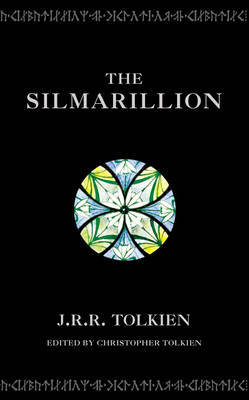
The Silmarillion by J. R. R. Tolkien

SUMMARY (from Goodreads): The Silmarillion is a gloriously realised story of rebellion, exile, war and the heroism of elves and men. But to gain an insight into the staggering complexity of Tolkien's world, however, the shorter works also included are must-reads. Dealing with the myth of creation, the nature of the Gods, the fall of Númenor and the Rings of Power, they paint a vivid picture not only of Middle Earth but also of the author's soaring imagination.

MY OPINION:

Despite having read The Silmarillion a few times before in Slovene translation, I have never reviewed it. Therefore, I decided to do so now that I have finally read it in English.

The Silmarillion is often referred to as a prequel to The Lord of the Rings. However, those who expect a similar epic adventure story might be disappointed.

Edited by Christopher Tolkien and published posthumously, it contains Tolkien’s writing about the early ages of the Middle-Earth. Though it is not a thick volume (my edition has just over 360 pages, not counting the nomenclature appendix), its narrative, great and tragic, is full of names and genealogical ties, regional and ‘political’ – in a sense – divisions, which may seem boring, but to me it is fascinating.

The Silmarillion is basically a historical narrative, fictional non-fiction, a book a Gondorean of the Fourth Age would use to study the ancient history or a Tolkien fan to learn more about the numerous references made in The Lord of the Rings: from Morgoth, the first Great Enemy, and the fall of Gondolin to personages such as Lúthien and Finrod.

Finally, as the icing on the cake, this edition contains a part of Tolkien’s letter to his publisher, conveying not only Tolkien’s ideas of his own work and its development but also his general views on fiction and writing.

Thus, with everything mentioned, I can only say I absolutely love The Silmarillion, both for its fictional and meta-fictional value.

5 stars 
RECOMMENDATION: Essentially, The Silmarillion is a history book and a bible at once (after all, The Bible is also a history book in a way) and reads as such; it provides an explanation of the creation of Tolkien's world and an account of the history of the Elves and Men before the time of the Lord of The Rings, and is as such a must-read for a fan of Tolkien’s work.

Wednesday, March 19, 2014

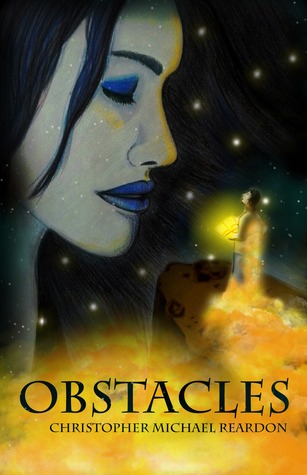
Obstacles by Chris Reardon

SUMMARY (from Goodreads): A child will die. You're afraid to live. Would you go to all lengths to save him? Darkness knows no bounds, as Alcott, an African American doctor sees all too well. The man is petrified by death. His fragile existence rests at the mercy of the universe. This fact is far too much for him to handle. From unyielding nightmares to elevator terrors, he's lost in paranoia.

Assigned to look after an ill child, Alcott's horrors only heighten. Gari is a nine-year-old boy with a fatal disease. He will surely pass on within the year. Alcott bonds with him more and more each day. Part of him knows this grim fate just isn't right.

Alcott befriends a hospital patient. This lunatic forces him to lug home an ancient text on bringing back the dead. Despite the man's obvious dementia, Alcott attempts the scheme. Charging up a cliff, he recites the chant over ocean gusts.

A god woman glides in from the horizon. She instructs Alcott on the trials to save Gari's life. These fearsome Obstacles require true strength. From battling sharks to wielding a flail, he must prove fortitude against genuine danger. Alcott decides his fate at this moment.
Death's claws shall not grasp Gari's soul.

MY OPINION:

Obstacles is Chris Reardon’s first novel, so I was willing to give it some leeway. However, there is only so much leeway I can give.

What I liked:

  • the premise of undertaking a Herculean-like quest in order to change fate and save someone from dying,
  • the lesson conveyed towards the end of the book, stressing the importance believing in oneself in order to succeed.

However, these were unfortunately overshadowed by what I didn’t like:

  • poorly developed characters:

    We don’t learn much about any of the characters. To start with, we never even learn what Gari’s illness is, or how Gari and Antuna can afford a live-in doctor, and what exactly Alcott does to help Gari.

    And is Alcott a first or a last name? We learn nothing about Alcott, besides the fact that he is a 30-something doctor (what kind of doctor?), though he acts and speaks like a teenager.

    Since I didn’t really get to know any of the characters, I didn’t care what happens to them and whether they succeed or fail.
  • in contrast with the lack of information about the characters, there is too much unnecessary repetition of easily-grasped data and concepts (I don’t need to be told the same thing five times, I’m not that stupid.)
  • the so-called obstacles, the tasks Alcott faces, are clichéd (sharks, labyrinth…) and there are just too many mythical elements from across cultures and genres (including humanoid aliens from Neptune) crammed together, all superficial and often rather silly.
  • poor vocabulary choices: it seems as if the author was trying too hard with the language, wanting to sound sophisticated, but it has the opposite effect – it sounds overdone, especially because of a modern setting and the first person POV narrative. Nobody thinks “we need to ‘dash’ out” and “i was ‘fatigued’“, do they?
  • the above said is in direct contrast with numerous grammatical errors, bad punctuation (so many ellipses), awkward or nonsensical phrasing (e.g. “I spark out” in the meaning “I say”), and colloquial language.
  • the scene structure is often illogical; for example, a person stands by the window and then goes to the window (without going away first), or a character faints again when that character hasn’t fainted yet in that scene.
  • And I could go on.

Overall, Obstacles suffers from insufficient revision and editing on all levels from content editing to proofreading. The teacher and the linguist in me were just itching the entire time to take a red pen and start jotting down corrections and suggestions for improvement. However, my time is too valuable to do that for free. Unfortunately, the editor, who is credited in the book and probably was paid, did a poor job.

Thus, Obstacles is basically a first draft with an interesting concept and possibly a potential of becoming a good, if not a great, book, but would need a few more rounds of revising and editing.

RECOMMENDATION: Clearly, I cannot recommend Obstacles, but if you have some time to spare and a will to try it, go ahead and form your own opinion.

1,5 stars

Disclaimer: I received a copy of Obstacles in exchange for an honest and unbiased review.

Saturday, December 14, 2013

The Hobbit: The Desolation of Smaug (2013)

NOTE: This post contains SPOILERS if you haven’t seen the movie and/or read the book.

the hobit 2SUMMARY (from IMDB): The dwarves, along with Bilbo Baggins and Gandalf the Grey, continue their quest to reclaim Erebor, their homeland, from Smaug. Bilbo Baggins is in possession of a mysterious and magical ring.

MY OPINION:

I have mixed feelings about the adaptations of Tolkien’s work. On one hand, the Tolkien nerd in me is irritated by the things they unnecessarily alter or add in the films. On the other hand, the films themselves are state-of-the-art, both visually and storytelling-wise, and if they bring Tolkien’s work closer to new readers, so much the better.

If I do some nit-picking, I can easily find things that annoyed me:

  • the mix-up with Bold and Azog which has already appeared in The Unexpected Journey is what bothered me the most as there was absolutely no need for it;
  • the Dwarves actually running from Beorn was a redundant addition, there only for the sake of drama, I guess;
  • Bilbo getting caught by a spider was done for the same reason, I think; and
  • the same goes for the Orcs following the Dwarves through Mirkwood to the Elf-realm and Esgaroth and keeping on attaching them;
  • Why on Earth did they think adding a weird love triangle between Tauriel, Legolas and Kili was a good idea?
  • Naming one of the guards in the Elf-realm Elros – I’m pretty sure there would be no two Elroses in Tolkien’s universe (Tolkien of course doesn’t say that explicitly, but as Elros, brother of Elrond, is a character of extreme importance, I don’t think there would be another one, unless the wood Elves named someone after him to honour his memory. See, I said I was nit-picking.)
  • Oh, and I hated Kili getting wounded and Fili and Bofur staying with him in Esgaroth, it was completely out of place, but they needed it to showcase more of Tauriel’s fighting skills and her healing skills, oh and because of the love triangle which angered me to no extent.
  • Gandalf going to check the Witch-Kings tomb didn’t make sense since the Wraith-king was supposed to have vanished from the North, not die, anyway, but they already made a mess of that plot element in the first film with the Witch-King’s blade.

However, if I look at the film adaptations as some sort of fan-fiction, then all the above things aren’t that terrible; they are just a twist to the story, an alternate universe of the canon, if you want.

Furthermore, there are other alterations and additions which I actually liked, even if they don’t originate in The Hobbit itself, but were incorporated from other Tolkien’s work, such as:

  • Gandalf meeting Thorin in Bree and
  • Gandalf searching Dol Guldur to reveal Sauron’s true identity are both mentioned in the LOTR and I liked that they included those events here.
  • Tauriel – I loved her, though she’s not in Tolkien’s works, and his Elf-women are more stay-at-home types (except Luthien and Galadriel, of course, or maybe we just think that. Tolkien does not say they were forbidden to fight or anything, he just doesn’t mention them, maybe it’s just our in-built patriarchal reasoning we base our assumptions on.) Anyway, Tauriel is super kickass, self-reliant and compassionate, and with a moral integrity of her own, and all of it makes a great character. If only they left the love triangle out of it.
  • I liked how they portrayed Thranduil, very in-character both as far as Thranduil himself is concerned and as Elf-lords in general: somewhat greedy and arrogant, but also dignified and essentially good (though we haven’t seen that yet).
  • Thorin actually telling Bilbo to steal the Arkenstone and Smaug figuring it out and telling Bilbo he would maybe let him take it, even if only to see Thorin destroyed by it, and later Bilbo figuring out how the greed for it is already destroying Thorin was inconsistent with the book, but it achieved the same effect as is done in the book by other means, so I’m fine with it. (And I bet we’ll get a flashback to Bilbo actually taking the Arkenstone in The Battle of Five Armies, or he will steal it later, at least he should, if they are sticking to the book as they should.)
  • The Dwarves fighting Smaug is not in the book, either, but it looked great.
  • Smaug. CGI well done. That’s all I’m saying.

Despite the length, two and a half hours went by fast. Though, I was bored a bit during the action sequences. Am I the only person who gets bored by action? All that fighting and improbable saves and moves and jumps and falls the heroes get unscathed out don’t work for me – or maybe the fact that too much happens too fast overwhelms my brain and I just zone out for a while.

All in all, The Hobbit: The Desolation of Smaug was a great film and I enjoyed it.

4,5 stars

RECOMMENDATION: If you enjoy fantasy and adventure, you will like this film. As for Tolkien fans, if you can give the film a bit of a leeway with the adaptations made, The Hobbit: The Desolation of Smaug is well-worth seeing. 

Wednesday, August 28, 2013

Angelology by Danielle Trussoni

SUMMARY (from Goodreads): Sister Evangeline was just a girl when her father entrusted her to the Franciscan Sisters of Perpetual Adoration in upstate New York. Now, at twenty-three, her discovery of a 1943 letter from the famous philanthropist Abigail Rockefeller to the late mother superior of Saint Rose Convent plunges Evangeline into a secret history that stretches back a thousand years: an ancient conflict between the Society of Angelologists and the monstrously beautiful descendants of angels and humans, the Nephilim.

For the secrets these letters guard are desperately coveted by the once-powerful Nephilim, who aim to perpetuate war, subvert the good in humanity, and dominate mankind. Generations of angelologists have devoted their lives to stopping them, and their shared mission, which Evangeline has long been destined to join, reaches from her bucolic abbey on the Hudson to the apex of insular wealth in New York, to the Montparnasse cemetery in Paris and the mountains of Bulgaria.

Rich in history, full of mesmerizing characters, and wondrously conceived, Angelology blends biblical lore, the myth of Orpheus and the Miltonic visions of Paradise Lost into a riveting tale of ordinary people engaged in a battle that will determine the fate of the world.

MY OPINION:

As much as Angelology deals with an intriguing topic and I liked some of its elements, it also has some shortcomings that seriously bothered me.

Firstly, what I liked:

  • The premise itself and the way Trussoni turns the myth of Orpheus.
  • Beautiful writing – sometimes (see below).
  • Evangeline – mostly the fact that she stays true to herself – I'm glad Trussoni didn't go with the trend of turning a character's personality completely around.
  • I find the idea of music being able to change molecular structure and thus damage/destroy or repair/heal things and people compelling.
  • The ending – how things play out especially in relation to Evangeline.

Secondly, what I found interesting, but not to my tastes:

  • The Europocentric origin of the Nephilim seems so clichéd to me, although I can see Trussoni's logic behind it.
  • Also, and I know it's a religion- and Bible-based, the punishment for the disobedient angel's transgression seems much too harsh for me.

And lastly, there were a lot of things I didn't like and annoyed me to no small extent:

  • A huge plot hole (slightly SPOILERY): the supposed radioactivity of (fallen) angels: if they are so radioactive that only a short exposure to their proximity is lethal for humans, how did they mate with human women without the women dying during the act, and even more, how were they able to bear them children? Unless angels are able to control the level of radioactivity they emit?
  • A stupid amount of foreshadowing: it made everything so predictable and I knew what was supposed to be the big surprise three quarters of the book ahead. I think that part of the plot should have just been dealt with early in the book instead of being hinted at time and again until I just wished the reveal was finally done.
  • Related to that: portraying Verlaine and Evangeline as basically ignorant and foolish, although they are supposed to be educated and intelligent people and yet they are completely oblivious to all the clues and hints.
  • And yet, once things get seriously dangerous and strange, they just take it in stride, without any sign of shock or fear or at least wonder. That is so absurd and unrealistic.
  • And while I'm at danger: everyone has an awful lot of time to talk things out and observe in the midst of being in a hurry and followed/threatened/attacked…
  • Details. Too many details of every little thing – the paper, the loops of letters, the pattern on the carpet… 
  • Digressions: no, I'm not interested in the furniture in the room while the main character is about to find out a piece of crucial information. Basically the dialogue and action are constantly broken by unimportant digressions and details.
  • And, why on earth did Trussoni have to stick insta-love in all this? What makes it even worse is Verlaine's reaction in the end, instantly forgetting this 'love'.
  • Repetition: of the facts, descriptions of the surroundings, etc., for example, Trussoni keeps giving lengthy descriptions of how cold it is – I know it's winter, no need to remind me over and over again. Once or twice it is beautiful, but then it gets irksome.
  • Also, I think the book could benefit from another round of editing: there are a lot of errors(what the heck is 'the creature comfort'?) and confusing scenes (a person who has just stood up and walked to the door magically jumps from the seat again.

Generally, I think Trussoni put in a lot of effort to make her style elegant and sophisticated but failed at the basics a bit too often. I could go on, but it's probably best to stop and not get into too much details and spoilers.

All in all, Angelology is an interesting book, but it has too many weaknesses for me to thoroughly enjoy it, although I'm a huge fan of mythology and supernatural. I was slightly appeased by the ending, however, I don't think I will read the following books in the trilogy. I am curious about how Evangeline's life goes on, but I am not up to more of the same style, at least not at present. Perhaps I am just too demanding and critical right now, as my reading is still in a rut.

3 stars

RECOMMENDATION: If you are a mythology enthusiast and a traditional Bible-based view on angels intrigues you, Angelology might be a good read for you, despite its shortcomings.

Wednesday, May 01, 2013

Wood Angel by Erin Bow


SUMMARY
(from Goodreads): Plain Kate lives in a world of superstitions and curses, where a song can heal a wound and a shadow can work deep magic. As the wood-carver’s daughter, Kate held a carving knife before a spoon, and her wooden talismans are so fine that some even call her “witch-blade”: a dangerous nickname in a country where witches are hunted and burned in the square. A mysterious fog ruins crops and spreads hunger and sickness. The townspeople blame Kate.

The stranger Linay will exchange her shadow for escape and her heart’s wish. It’s a chance for her to start over, to find a home, a family, a place to belong. But Kate soon realizes she can’t live shadowless forever — and that Linay’s anger and grief (like the bereaved author) can "level a city".

MY OPINION:

What I liked:

  • Kate. She is a wonderful character. Definitely flawed, and with heaps of misfortune, but she is persistent to survive, to learn to better herself and her life. I loved her passion for carving, which is not a simple occupation for her, but a vocation, a gift she uses to serve and help other people.
  • The way magic is explained and treated: a mix of traditional and unique concepts, especially the notion of magic being an exchange of gifts.
  • The way the rusalka legend is presented.
  • Taggle. I don't know how to describe him without spoiling anything. He is one of the best cats I have ever read about. Fierce, clever, loyal little thing. I loved him.

What I didn't like:

  • Stereotypical portrayal (especially of the Roma people) in spots.
  • Indecisiveness whether to make it a YA or adult (meaning as for older readers) novel:
    Let me explain. The main character is a 14-year-old girl and on the first impression this quite a short novel tells a story of adventure, magic and fantasy, but on the other hand the novel deals with topics that may be too mature for many a young adult, such as cruelty and neglect to both animals and people/children; poverty; discrimination against women, the poor, and the Roma people; witch-hunting; and moral aspects of using (black) magic. At times Bow uses some clichés in regard to these topics, although I generally liked the way they were dealt with.

Wood Angel managed to keep my attention and I read it quite fast, considering my recent reading manner, so this is a big compliment to the book. It made me frown and laugh a few times, and cry in the end, all of which is also a compliment. Generally, I enjoyed Wood Angel. It is a dark story, but a suspenseful and intriguing one..

RECOMMENDATION: I would recommend Wood Angel to mature teens and older due to the topics it deals with. If you like a darker fantasy and adventure, I think you might enjoy Wood Angel.