Showing posts with label **** VERY STRANGE. Show all posts

Wednesday, March 25, 2020

Sins of the Angels (Grigori Legacy #1) by Linda Poitevin

The main culprit for the fact that this has only taken me almost four months to finish is that it employs a certain type of suspense that I find increasingly frustrating, namely, when the readers know something the characters don't and it takes them ages to get there.

I don't consider it a spoiler, because it is evident right from the beginning of the story if not from the title itself, but I'm putting it under the SPOILER tag anyway: Obviously (or not), Alex, the main protagonist, doesn't believe in angels, heaven, etc. and when she starts seeing wings, she fears she is going insane, especially due to her family history. END OF SPOILER

However, the very same thing is also one of the strongest points of Sins of the Angels, because such an attitude is rather more realistic than most books of the genre adopt, which is a quick and more or less easy acceptance.

Anyway, that piece of knowledge the readers have but that Alex keeps trying to remain in denial about for nearly 70% of the story was frustrating as hell for me; I could only bear to read a few chapters at a time.

And after that point, when Alex catches up with the facts, I finished the rest in one go, because Sins of the Angels is ultimately a compelling, well-written story that adds the previously explored concepts their own unique twists.

Therefore, I am, now that we got over with that discrepancy between the characters' and the readers' knowledge, definitely interested to see where the rest of the series takes us.

Thursday, November 29, 2018

The Vow on the Heron (Plantagenet Saga #9) by Jean Plaidy

The Vow on the Heron depicts the reign of Edward III, starting and ending similarly in disgrace and with an impoverished country, but with a tumultuous journey in between.

Beginning as a puppet boy-king, Edward III rose from his early failures of youthful inexperience as a great military leader, often likened to his grandfather Edward I and most notably remembered for staring the Hundred Years’ War with France.

What I liked the most about his life was that he had a really good marriage and family life and was for the most part a faithful husband and a good father, which seems to be an exception more often than not when it comes to historical rulers of whichever country.

As usually with Plaidy, The Vow on the Heron is written in a simple but evocative language that makes what could be a boring history rather interesting, although it could be edited a bit more meticulously.

Overall, this was a quick and easy but compelling read.

Thursday, November 22, 2018

Alpha (2018)

DIRECTOR: Albert Hughes; CAST: Kodi Smit-McPhee, Jóhannes Haukur Jóhannesson, Marcin Kowalczyk…

SUMMARY: During the last Ice Age, a friendship forms between a boy on the verge of adulthood and a wolf.

MY THOUGHTS:

Although I’m more of a cat than a dog person, Alpha was one of my must-see films of this year ever since I had seen the first trailer and it did not disappoint.

A coming-of-age story follows a developing bond between an injured boy and a wounded wolf in a suspenseful and oftentimes poignant arc that comes to a heart-warming conclusion.

The film is filled with stunning visuals and some breath-taking action; CGI is not half-bad, either. And, with a fictionalised backdrop and taken with a grain of salt as to historical accuracy, Alpha could have nevertheless been one of the versions of how people domesticated wolves.

My only ‘complaint’ is that with around an hour and a half the film could have been longer; I would not mind watching more of Keda and Alpha’s adventures at all.

RECOMMENDATION: The film contains hunting and other animal injuries, so you might want to be careful if you are sensitive to that (but all ends well for the main protagonist.) Other than that, Alpha is an engaging film that is perfect for watching on one of these dark winter nights when you need something to make you feel good.

Saturday, October 27, 2018

Beren and Lúthien by J. R. R. Tolkien

The story of Beren and Lúthien is one of the three central stories of Tolkien’s Elvish history, presented in this book in a new light, revealing the process of Tokien’s writing and how it evolved from its earliest concept to the latest, though never quite finished version.

Edited by Christopher Tolkien, Beren and Lúthien is actually a collection of various versions, accompanied with a commentary on their conception and development and the reasoning behind it, following by now a familiar approach when it comes to Tolkien’s posthumously published works.

As such, it comes out rather academic – perhaps overly so – to a reader only interested in a ‘story’.

However, I found Beren and Lúthien extremely readable and even refreshing and I loved rediscovering the already familiar story from The Silmarillion with its different and new angles through both in prose and verse. Although Tolkien’s poetry does at times seem awkward, it is in most places highly evocative and yet again shows Tolkien’s skill. The latest written verses in particularly make you think about what he could have done if he had had more time.

I was, nevertheless, a little ‘disappointed’ to learn that Tolkien was apparently not a cat person (just kidding, LOL.)

All in all, Beren and Lúthien was an enjoyable and quick read that only rekindled my love for all things Tolkien.

Monday, June 25, 2018

A Happy Death by Albert Camus

As a sort-of preconception of The Stranger, A Happy Death is also its flip-side in which Mersault gets away with pre-meditated murder (as opposed to what we could say is, if I remember correctly, involuntary manslaughter in The Stranger.)

While Mersault of A Happy Death is not yet the alienated and detached Mersault of The Stranger, for he still possesses the ability to be affected and to form attachment, the early seeds of absurdism are present in his quest of finding happiness.

In accord with his – for the lack of a better word – victim’s claim that money cannot buy happiness but it can buy time, which is essential for the pursuit of doing what you want and enabling one to be one’s true self, Mersault discovers that one can only find happiness with oneself, in the very solitude of being oneself.

However, that is easier said than done, as having time does not guarantee happiness per se. To be happy requires being the will to be happy, to immerse oneself in the present, in the here and now, and arrange the time one has to that purpose.

And that state is what Mersault manages to achieve and does in the end meet – although an outside observer would call it all but one – a happy death.

I must say I find these concepts both mind-boggling and intriguing but also agreeable – to an extent; they certainly give one food-for-thought and the desire to revisit them and this novel as well as its eventual and more famous successor.

Additionally, A Happy Death (as well as The Stranger, as far as I remember), has a certain ease of language, and I found myself liking the style very much; I particularly loved how Camus uses the wording and pacing to illustrate various settings and Mersault’s states of mind.

My edition came with a lengthy afterword, providing literary analysis I disagree with on several points.

Chiefly, it simplifies Mersault motive for his act of murder merely as greed (and jealousy, which I couldn’t see at all), whereas I saw it at least in equal part as an act – albeit certainly not selfless – of some kind of mercy that can be basically considered euthanasia of the man who per his own admission did not want to live the life he had but lacked the courage and strength to end it himself. (To be clear, I am not exonerating Mersault’s motives, I just think they are more complex that Mr. Sarrocchi would want the reader to believe.)

I also do not think the discrepancies between the autobiographical elements of Camus’s life and their imperfect alignment in fiction should be held against the novel. After all, complete truthfulness to real life is not the measure of quality of fiction.

And lastly, according to Mr. Sarrocchi, A Happy Death supposedly failed as a novel in terms of form and composition, which must have been the reason it was not published at the time of writing and was later reworked.

Nevertheless, to conclude, I think that in 80 years since the novel’s conception (and 45 since the aforementioned critique’s) the literary landscape has changed enough that we, new readers, can appreciate A Happy Death from a different perspective and with the experience of the present time which Camus’s work seems to resonate with perhaps better than it did with the time of its origin.

Thursday, March 08, 2018

Pet (Captive Prince short stories #4) by C. S. Pacat

Note: This review contains SPOILERS.

SUMMARY (from Goodreads): Pet follows the rise of Ancel at the poisonous court of Vere. Set during the events of Captive Prince.

MY THOUGHTS: 

Pet turned out to be one of those why-haven't-I-read-it-sooner books for me, because I wasn't particularly interested in Ancel, but I should have known better.

Not only did C. S. Pacat ruin me with Laurent/Damen feels despite them appearing in the story only in that single horrible scene (you know which one) yet again but also managed to make me feel for Ancel.

On first impression, Ancel appears to be driven by ruthless ambition alone, but beyond that it is survival itself that drives Ancel to master selling himself in order to climb the social ladder to the top; and who can blame him for that? The path is, however, paradoxical, because the higher one gets in the Veretian society and the more means for a (luxurious) living one obtains, the more one's very life is in danger.

In addition to the familiar atmosphere of intrigue, we see through Ancel's eyes how ingrained the oppressive concept of 'pets' is in pets themselves, most notably at his utter disdain for Erasmus and his predicament/distress, which with only his own experience to judge the matters by makes perfect sense (despite, obviously, being wrong.)

I really liked Berenger's character and the somewhat surprising tones of the relationship between Ancel and Berenger.

And finally, I loved the ending for the rather unexpected positive turn that looks into a hopeful (hopefully!) future, knowing the path of the main series. But at the same time I am also a bit mad/sad/frustrated that this is The. End. Darn.

Thursday, September 14, 2017

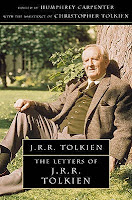
The Letters of J. R. R. Tolkien

Cover of The Letters of J.R.R. Tolkien
Tolkien’s letters are at times tedious and repetitive – just as life can be – but for the most part very compelling reading material.

For a fan of Tolkien’s works, it is interesting to read about the process of how they came to be written and published. Moreover, reading about his writing process itself is both inspiring and motivational to a writer, although Tolkien might be turning in his grave if he knew that people find his writing struggles either. Equally inspiring and thought-provoking are Tolkien’s world-views and philosophies, both general and academic, even if I disagree with some of them (which were a product of his time.)

The language, style, and tone of his letters range from intellectual and strictly formal to warm, familiar, and humorous in places, with an occasional special brand of ‘saltiness’ shining through which I greatly appreciated, and show him not only as an author but as a nuanced personality.  

Tolkien’s letters are probably best appreciated if read and digested little by little and not to be sped through, although I have done precisely that with the second half of the book because I got fed up with myself that it was taking me so long.

Overall, Tolkien’s letters are a fascinating read and therefore I definitely intend to return to them in the future.

Thursday, May 18, 2017

Finding Anna series by Sherri Hayes

Note: The series reviewed contains themes only appropriate for those over the age of 18. Some of the content may be triggering. Also, take heed that there may be some mild SPOILERS ahead.

Finding Anna isn’t what I expected it to be, but in a good way.

Although it is categorised as erotic romance, this 4-book series is really a story about a victim of human trafficking and sexual slavery taking back her life with both the help of other people and her own iron will.

Like the story, Stephan is not a typical protagonist of the genre, either. I liked that he isn’t the tortured hero with a dark past type, but is a genuinely good person and does not just his best to help Anna, but what actually is best for Anna. Which doesn’t mean that he doesn’t mess up, because he does.  

However, for a change from a lot of male protagonists in the genre, Stephan doesn’t hesitate to acknowledge his faults, apologise for his mistakes and try to fix them. For the most part, though, he is a level-headed man, with the patience and self-restraint of a saint, and would be almost too good to be true, if not for having a few actual flaws.

Even though Anna is very dependent on Stephan (as she would be on any other given person, considering that she literally cannot function on her own after her captivity), Stephan doesn’t take advantage of that. On the contrary, he encourages her to spread her wings and return into the world – but at the pace that is comfortable and safe for her. And even when, out of concern for her, he disagrees with her decisions, he still supports her and helps her carry them out in any way he can, even if it means having to step aside.

Additionally, I loved that Stephan isn’t Anna’s only source of support and doesn’t limit her to his social circle; Anna also reunites with a childhood friend, who also brings other people into her life, and I loved how both men put their mutual dislike and distrust of each other aside for her sake.

For erotic romance, Anna and Stephan’s relationship is pretty tame and doesn’t go further than light kink and develops slowly, progressing to intimacy only towards the end of the second book. Which is good and necessary, as it is contrasted against Anna’s horrendous past experiences.

Hence, Finding Anna is an emotionally demanding series, both for the references and flashbacks to the abuse Anna has been through (and which can be hard to stomach, so be warned) and the ways it affects her in the present.

That said, it is also very satisfying to see Anna recovering from her trauma, regaining her sense of self, and reclaiming her sexuality. And although that is bound to be a life-long process, Anna’s abusers don’t win. She does. And gets to live (mostly, I assume) happily ever after. 


Monday, May 08, 2017

The Adventures of Charls, the Veretian Cloth Merchant (Captive Prince short stories #3) by C. S. Pacat

SUMMARY (from Goodreads): The Adventures of Charls follows the dealings of a humble cloth merchant in the days before the royal Ascension. Set after the events of Kings Rising and The Summer Palace.

MY THOUGHTS:

I am only taking away a star because of that abrupt ending. I need Charls's reaction when he figures it out, damn it! And, well, Damen’s or Laurent’s POV would be immensely more welcome. Although, I can well imagine our beloved kings had fun trolling Charls behind his back the entire time.

I pretty much loved everything, from all the undercover shenanigans to Laurent totally being ‘chaotic good’ and the mention of the cuff (I assume Laurent is still wearing his, too) to all the glimpses into Damen and Laurent from Charls’s POV.

Seeing the events and characters through Charls’s eyes was definitely entertaining as he is very perceptive in some ways (and I loved his loyalty and concern for both Laurent and Damen, I mean, Lamen), but his wit fails him in certain aspects and leaves him terribly (but adorably) oblivious.

All in all, The Adventures of Charls, the Veretian Cloth Merchant made me laugh and smile and still does even days after reading it, and was a great addition to the Captive Prince universe.


Tuesday, February 28, 2017

Dark Skye (Immortals after Dark #15) by Kresley Cole

Note: The book reviewed contains themes only appropriate for those over the age of 18. Also, take heed that there are some SPOILERS below.

Before they were mortal enemies, they were childhood best friends. Despite belonging to enemy factions. Three (well, four, eventually) dead parents later, their friendship – let alone anything more – is over, seemingly irreparable, replaced by pain, fear, and resentment. Or is it?

I have to appreciate time and again in IAD series, how Kresley Cole’s concept of ‘fated’ mates means anything but a guaranteed happy ending (within the story; on a meta level, of course we all know it will happen) for the pairing of the moment, for there are so many things that could go wrong and keep them apart, destiny or no. I love that it takes much more than ‘fate’ for love to win.

That is also the case for Melanthe and Thronos: it only takes them five centuries of running and pursuit, before they even start resolving the hurt and misunderstandings from their past and working towards a future (trying to survive while having only each other to rely on helps a lot, though, even when they ‘hate’ each other.)

Granted, the said resolving starts off a bit slow and that made me feel a little underwhelmed and frustrated (If only they talked to each other!), but once they get past a critical point, the story picks up and, damn, it is worth every moment of the earlier frustration.

Hence, I ended up absolutely loving Melanthe and Thronos’s story: one of the most painful, tragic, but also heartfelt and beautiful ones in this series; they ended up being one of my favourite IAD couples, just as I had expected and hoped for.

Furthermore, in Dark Skye, Cole pulls together quite a few threads from other stories and the larger Ascension plotline, bringing us up to speed with some of my favourite couples from the previous books. Which made me want to reread some; I think I might have to check back to at least Cadeon and Holly’s and Rydstrom and Sabine’s stories, and maybe Lothaire. (But when will I have the time to both reread and continue the series, that is the question.)

I loved seeing Nix’s perspective and the revelation why she is playing the matchmaker for so many pairings: because, ultimately, all the mixed-factions couples will come in handy for joining Vertas and Pravus in the fight against a common enemy, the Bringers of Doom. Because this will be an Ascension on a whole new level, apparently, and I am so looking forward to it. (And Nix coming out of it as the goddess of Ascensions prediction is perfect for her.)

I could flail about so many more details, but I don’t want to spoil everything for those who haven’t read the book, yet.

In conclusion, therefore, let me just say that Dark Skye is a fascinating, intense, and clever story. It was one of the instalments I had been looking forward the most, and, even if it didn’t look like it in the beginning, it truly lived up to it.

Now, I must hurry and read Sweet Ruin, so I can next get to Shadow’s Seduction (which was released today) ASAP.

Monday, February 20, 2017

Beyond series by Kit Rocha

Note: The book series reviewed contains themes only appropriate for those over the age of 18.

Those of you who follow me on Goodreads may have noticed that I burned through the 13 books (well 3 of those are short stories and 3 novellas, but still) of this series in January, which is more reading (not counting fanfiction) that I had done in 2016 altogether.

Apart from the mini-reviews posted directly on GR as I finished each book, I didn’t review them, because, truthfully, I would have just repeated myself a lot. Also, I preferred to spend the time I would have put into struggling with how to write reviews into actual reading.

However, I loved this series so much that I still feel the need to flail about it. Beyond series is set in a post-apocalyptic, dystopian world, and the first book starts off as erotica with plot (about 50/50), but sets up the world-building just enough to tempt you to continue the series.

And then you are trapped.

Because with each book, the world gets more and more expanded and complex and keeps you hooked. The development of the over-arching conflict between the opposing sides is extremely compelling and the series tackles a number of real-life issues with an incredibly sensitive and insightful approach that surpasses that seen in many of so-called ‘high’ mainstream literature.  

And, of course, the authors are sneaky and keep introducing characters you fall in love with a few instalments before their actual stories. Hence, binge reading. Because you have to read on to see what happens to them. But you can always count on a happy ending in this series, which is just another major plus.

Have I mentioned I fell in love with all (well, except the evil ones, but those I loved to hate) these stupid asshole characters? Men and women. Yeah.

Anyway, there are many other things I could flail about, but since I don’t want to spoil anything for you (which was another reason for not reviewing each book on its own), let me just finish by saying that if you are a fan of dystopian lit combined with erotica, I highly recommend you check this series out.

Wednesday, February 08, 2017

MacRieve (Immortals after Dark #14) by Kresley Cole

Note: The book reviewed contains themes only appropriate for those over the age of 18.

Uilleam MacRieve appeared on the fringes of previous stories quite a lot and I felt like it was high time to pick up his story.

I had a rather long break from reading this series, but you can always count on Kresley Cole to sum things up enough to make you remember the important parts from the past instalments without making the story tedious.

So, we meet Uilleam – okay, I will go with Will, because that spelling is finger-breaking – a few weeks after the escape from the prison in book #11 as a broken man, plagued both by the ordeal he went through on the island as by the past wounds the experience re-opened, dinking himself to a stupor every day and planning a trip to the immortals’ suicide cove.

Enter Chloe Todd, a professional football (sorry, an European here, seeing the word ‘soccer’ hurts my brain) player about to see her life dreams come true by competing at the Olympics, who is suddenly faced not only about the existence of the supernatural and becoming one of them, but also with the fact that her father is not who she thought he was, but none other than Preston Webb, the sinister leader of the Order that hunts supernatural beings.

While everyone in the Lore is hell-bent on seeking out their revenge against Webb through his daughter, Will hides his fated mate to keep her safe, unaware that she is about to come into her immortality as one of the species he detests from the bottom of his heart for all he has suffered because of one of them as just a boy.

And that is when the real problems start. Fortunately, between these two idiots who could have avoided much trouble had they only communicated – although I have to give props to Kresley Cole: Will’s inability to communicate about his past trauma is very realistic – Chloe is rational enough to put some things together on her own and thus finds in herself enough patience for Will to catch up and do his part of psychological and emotional heavy lifting as well, eventually.

My heart broke for Will in regard to certain aspects of his backstory, but I loved that she picked a male protagonist to deal with that, because it is all too often that males are dismissed as potential victims and I loved how Kresley Cole dealt with that particular topic.

And finally, Kresley Cole managed to surprise me with the Ubus people, of whom we have been told again and again in the series that they are evil, but of course there is more to that than that and I absolutely loved the twist regarding that species and I would love to see more of them now, with everything we learned in MacRieve.


Thursday, January 19, 2017

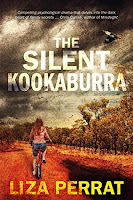
The Silent Kookaburra by Liza Perrat

SUMMARY (from Goodreads): All eleven-year-old Tanya Randall wants is a happy family. But Mum does nothing besides housework, Dad’s always down the pub and Nanna Purvis moans at everyone except her dog. Then Shelley arrives – the miracle baby who fuses the Randall family in love for their little gumnut blossom.

Tanya’s life gets even better when she meets an uncle she didn’t know she had. He tells her she’s beautiful and could be a model. Her family refuses to talk about him. But that’s okay, it’s their little secret.

Then one blistering summer day tragedy strikes, and the surrounding mystery and suspicion tear apart this fragile family web.

MY THOUGHTS:

The beginning felt a little slow, but that later on proved necessary as it provided the fine cues for the rest of the story.

I was initially wary of the first person POV. However, Liza Perrat manages to pull off the 11-year-old’s language and rationale with great authenticity and without impoverishing the story. Quite the contrary, the style imbued with local linguistic flavour only enriches it.

While Tanya’s uncle was the sort of a bad person that made me root for the mobsters to take him out, I couldn’t help myself thinking that had he received some help and support, he might not have become what he had. The victim-turned-perpetrator stereotype doesn’t sit well with me: some victims do turn out just like their abusers, but it is not inevitable if the people close to the victims and the society at large offer them proper help.

I loved how in The Silent Kookaburra Perrat seamlessly and with great insight incorporates a number of issues which are still current (or which are, really, current in every age.) These range from poverty, domestic violence, depression, loss of a child, alcoholism, superstition and prejudice against immigrants and people of other religions, and probably some more that I forgot about.

Tanya herself has a lot on her plate, dealing with alienated parents (from each other and the children), bullying, low self-esteem, having to grow-up early, and being the target of the mysterious uncle who says all the right things to make her feel good but has nefarious intentions towards her.

In several ways, I could relate to Tanya, and Liza Perrat captured her struggles in a very genuine manner that truly resonated with me.

At the end of the story, one of the main mysteries of the book remained unresolved. But that is just life; we don’t always get all the answers.

And finally, I loved that Tanya got her happy ending, albeit it was a bit clichéd, and that certain prejudices were overcome for the good of everyone involved.

RECOMMENDATION: The Silent Kookaburra is an incredibly rich story set at the beginning of the era I would consider ‘modern’ that provides a wealth of food-for-thought for everyone not afraid to dig into some, perhaps uncomfortable, but still very current and important issues, and is, therefore, a very compelling read.


The author has sent me a free copy of The Silent Kookaburra in exchange for an honest and unbiased review. 

Thursday, January 12, 2017

Labyrinth of Stone by TA Moore

SUMMARY (from Goodreads): Ten years ago the Black Rapture transported thousands of people, seemingly at random, from Earth to the strange, inimical world they call the Labyrinth. Will Teller was one of them. Surviving that meant joining an army and becoming better at killing than he's comfortable with. It's enough upheaval for anyone's life. The only problem is, apparently no one told his commanding officer that.

Pride, and heart, stung by abandonment, the icily controlled General Nathan Kearney has decided that Teller can either find the wayward lover, or he can take his place in Nathan's bed. That's pretty good motivation for a straight guy, only thing is - Teller's sexuality seems to have gone a bit Magic-8 Ball on that issue. Suddenly Nathan's starting to look pretty good, and the only question is whether or not Teller wants to be the consolation prize?

MY THOUGHTS:

I should probably reread Labyrinth of Stone to do it proper justice – and I’ll definitely give it another go – but since I don’t see the time for a reread in the near future, this will have to do for now.

In Labyrinth of Stone, TA Moore blew me away with her masterful world-building, once again, with the gritty, raw imagery of the alien, dystopian setting and its unique characteristics. The same goes for her characters: rough, complicated, hardened by circumstances, yet softened by distinct quirks and dry humour.

What I missed in the Labyrinth of Stone was at least a hint of a resolution to two of its major mysteries, but I can live with it.

All in all, Labyrinth of Stone is a fascinating story for its plot, setting, characterization, and relationships between various characters. With the way TA Moore crafts her words, sharp and eloquent, it was a delight to read.

RECOMMENDATION: If you are into no nonsense m/m Sci-Fi romance, I absolutely recommend you check out Labyrinth of Stone.


Saturday, December 10, 2016

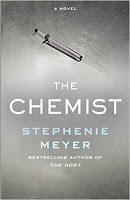
The Chemist by Stephenie Meyer

Cover of The Chemist
Having worked for a secret government department, the protagonist of The Chemist lives on the run, hiding from her previous employers who want to kill her for what she learned through her work. The stakes of survival get raised higher than ever when her former handler contacts her with one last assignment, offering her a way to clear the target off her back. And thus, the chemist starts to unravel a knot of secrets, launching into a thrilling and utterly compelling story.

Unsurprisingly, The Chemist gripped my interest from the start and held it to the very end, and I lost hours and hours of sleep to it because I couldn’t put it down – I just had to know what happened next!

Now, I would love to rave about this book, but I think a major part of enjoying it goes to being unspoiled about it, so I am in a dilemma what to say about it.

I have to say I loved the main three characters. No, they aren’t perfect: they are certainly flawed each in their own way, but that’s what makes them feel real, and Meyer excels at bringing them to life and making us root for them (or, in case of the bad guys, root for their demise.) That extends further than humans: I am not much of a dog person, but with the way Meyer wrote the dogs, they grew on me so much!

Of course, I loved the dynamics between the characters, especially between the main trio (No love triangle! That’s definitely an upside of The Chemist), whom I liked very much as intriguing individuals, as well.

On first impression, I was slightly underwhelmed by the ending, maybe because it wasn’t as intense as the rest of the book or because it was what I expected it to be. But it was a good ending, very much in Stephenie’s style, and I liked it.

All in all, The Chemist (a stand-alone, which is another upside to it) is a highly suspenseful, gripping story, full of danger and intrigue, but also newly found love and friendship, and I got drawn right into it all while reading.

Therefore, the bottom line is that I loved The Chemist very much, but I am terrible at reviewing without spoilers and since I don’t want to lessen your enjoyment of the book with those, I can only poorly express my far-from-little appreciation of this book, with which Stephenie Meyer remains one of my favourite authors.


Monday, November 28, 2016

Green but for a Season (Captive Prince short stories #1) by C. S. Pacat

Green but for a Season is a Captive Prince short story about the relationship between Jord and Aimeric, set during the events of Prince’s Gambit. Or so the summary says, but it is actually mostly about Jord and less about Aimeric or their relationship, although that worked just as well for me.

Anyway, I had taken a glance at a few spoilers, so I thought I knew what to expect, but I wasn’t ready for this. So many Laurent feels!

Because, while Green but for a Season takes on Jord’s way into Prince’s Guard and his perception of the goings-on around him, we get to see the beginnings of Laurent’s struggle against the Regent. Through Jord’s eyes we witness the (re)formation of the Prince’s Guard and its struggles: Laurent gaining his men’s loyalty by first and foremost showing them his loyalty, the Regent’s attempts to sabotage him and nick his succession in the bud (and now we know why!), and Laurent’s perpetually astonishing foresight and character.

The red-line of the story, Jord’s and Aimeric’s relationship, falls from the forefront into the background while Jord reflects on the differences between aristocrats and commoners that make him wary of Aimeric interest. Thus, their relationship’s advancement is subtle, but fittingly so, and ends on a note where the reader can garner the rest from Prince’s Gambit, so Pacat does not need to repeat parts of the story, which is just another plus.

I feel like I shouldn’t write too long a review for such a short story, so I will stop here by saying that Green but for a Season is a delightful addition to the series and another gem in the already beloved world of the Captive Prince.


Friday, November 11, 2016

Captive Prince (The Captive Prince #1) by C. S. Pacat

Captive Prince Cover
Note: The book reviewed contains themes only appropriate for those over the age of 18.

Controversy, criticism, and calls for censorship (!) are a sure-fire way to make me read something so I can form my own opinion. I heard of Captive Prince a while back from a friend who thought it would be to my liking, but I forgot about it until I stumbled upon some heated debate over it on tumblr, and then I had to read it.

And am I glad I did!

So, Captive Prince tells a captivating (pun intended) story about Damen, the prince and heir to the throne of Akielos, whose bastard brother usurps his place, makes him a slave, and sends him as a gift to the prince of the enemy kingdom of Vere.

I loved the stunning setting of the story, something akin to Ancient Greece meets early Renaissance France (but with extra debauchery), both cultures thinking of the other as barbaric, and yet not so different at all, despite some striking contrasts.

Slavery is a quintessential part of the world in the story and the theme that provokes the most controversy. We can all agree that slavery is an abominable concept, and as such, C. S. Pacat does a great job to present it as it is, unglorified and cruel, in particularly in Vere.

In Vere, being a slave is shameful; a slave is an object for other’s enjoyment, subjected to all kinds of mistreatment, beatings, rape. Lack of communication or miscommunication as a plot device normally irks me, but I liked how Pacat brilliantly uses it to make a point: a slave’s word in Vere is less than nothing, not even worth asking for (for the most part.)

Meanwhile, in Akielos, slavery is basically a profession, one a person is trained for, and is ascribed different levels of honour, although Veretians frown upon the way Akielos slaves are stripped of their own will. However, in Akielos, slavery is a trade-off: slaves’ perfect obedience in exchange for masters’ perfect treatment. (It is still wrong, though.)

In addition to the above, the detailed world-building of both cultures is fascinating in many other aspects, but I will leave it at that as to not spoil everything and move on.

Next, the characters are incredibly fleshed out, especially the main protagonists, both of whom I came to love by the end of the book (yes, Laurent, too.) The set-up for their story includes all of my favourite tropes: enemies to lovers (well, not yet), opposites attract, the hero and the (not really) villain.

If you are looking for romance, you will find very little of it in Captive Prince, least of all between the main protagonists, because this story is really a build-up to it. Nevertheless, you won’t be bored at all, for there is enough political and social intrigue, power-plays, engrossing interactions, and more to keep you in thrall to the last page.

All in all, I liked Captive Prince very much and I think that is all I can say as I wrap this up. Now, excuse me, I am in a hurry to start the second book in the trilogy. 


Tuesday, April 12, 2016

Blood Rose Angel by Liza Perrat

Review:

Blood Rose Angel (The Bone Angel Series Book 3) - Liza PerratBlood Rose Angel is the third in the L’Auberge des Anges trilogy, but it can be read as a stand-alone, just like the other two books.

Set in the already familiar Lucie-sur-Vionne, Blood Rose Angel takes us back to the mid-14th century, when the Black Death first appeared in Europe, and this terrible pestilence is what midwife Héloise, the ancestor mentioned in the previous two books, has to face.

I loved reading about this specific time period from the viewpoint of common people, moreover, from the viewpoint of a heroine who is underprivileged even in commoners' terms, a woman frowned upon for her birth, often disregarded because of gender, and both valued and despised for her profession of a midwife and a healer.

Héloise is a brave, sometimes too reckless a woman in her beliefs and desire to help people, struggling between the profession she has pledged herself to and the dangers it brings for her and her family. Despite the troubles she finds herself in and that make her despair at times, she never gives up her call that drives her and ever revives her optimism, enabling her to take something good from the worst situations and despite everyone else. And so, her 'inferior' knowledge and methods, promoting such 'innovative' concepts as cleanliness and isolation of the sick, bring results and change her life and the lives of others forever.

Through rich, well-nuanced language, Liza Perrat vividly brings to life the era full of superstition and prejudice, where the governing Church and nobility had all the power and common people had none. However, while she doesn't shy away from gritty details, she balances the toils and troubles of medieval common folk with just as lively images of joy and happiness.

The end result is an intriguing, suspenseful story, full of life-like characters and issues even a modern person can relate to. Hence, I very much recommend Blood Rose Angel to lovers of historical fiction.

Disclaimer: The author has kindly sent me a copy of Blood Rose Angel in exchange for an honest and unbiased review.

Originally posted on my Booklikes blog

Friday, January 22, 2016

The Follies of the King (Plantagenet Saga #8) by Jean Plaidy

Review:

Follies of the King (Plantagenet Saga) Paperback - February 1, 2008 - Jean PlaidyThe Follies of the King deals with the reign of Edward II, who inherited his father's looks, but is as unlike him as possible in any other way.

Preferring the company of men to that of women and the merry sides of life to the matters of the state from an early age, Edward II marries Isabella, a beautiful daughter of Philip IV of France, but neglects her in favour of his lovers Piers Gaveston and Hugh le Despenser.

Utterly humiliated, Isabella bids her time, comforted only by the admiration of her people while she plots vengeance, counting on people's ever-growing dissatisfaction with their king and their hate for his male friends.

Yet, when Isabella finally manages to enact her revenge, in the end I couldn't help but feel sorry for Edward. Deposed and imprisoned, he finally recognises the mistakes he made by turning a blind eye to the world around him, admitting he was an unworthy king not made for ruling, before he meets a horribly cruel tragic end.

The Follies of the King is a suspenseful story, full of twists and intrigue and has thus definitely kept my interest in reading the rest of the saga. I will take a break from it for a while, but I am already looking forward to reading the next instalment, dealing with the reign of Edward III.

Originaly posted on my Booklikes blog.

Saturday, January 16, 2016

Ant-Man (2015)

Ant Man Movie Poster
DIRECTOR: Peyton Reed; CAST: Paul Rudd, Michael Douglas, Evangeline Lily…

SUMMARY (from IMDB)Armed with a super-suit with the astonishing ability to shrink in scale but increase in strength, cat burglar Scott Lang must embrace his inner hero and help his mentor, Dr. Hank Pym, plan and pull off a heist that will save the world.

MY THOUGHTS:

I have a terrible misconception when it comes to Marvel movies (although by now I should have learned to know better), namely that they are either cartoons for kids or stupid action, neither of which is true, of course. Ant-Man is no exception, and I am yet again wondering why I haven’t bothered to watch it sooner. But better late than never.

Ant-Man is a most of all an entertaining film with great visuals, but it also offers some food for thought by seamlessly incorporating a few hard truths about human existence and nature.

I was floored by the cast’s amazing performances, especially because I’m a noob who doesn’t check the cast list before watching, and just seeing Michael Douglas was like a punch in the gut – in a good way. Also, I absolutely loved the minor appearances of Peggy Carter and Sam Wilson.

Finally, Ant-Man was nicely tied up with the wider Marvel’s cinematic universe with the little allusions to CATWS and Age of Ultron and with the final bonus scene that reminded me of what is to come in Captain America: Civil War (as in death by feels, that's what.)


RECOMMENDATION: Overall, Ant-Man is a fun, highly enjoyable film, and a must-see if you are a fan of sci-fi.