As I understand it, the entire story of Animal Farm is one giant cynical metaphor for a failed communist utopia (because a communist utopia is a fail all of itself). It includes all the most representative tropes from mindless masses (animals) and propaganda (Squealer) to class enemies (upper class/management/capital owners), both outside (humans) and inside (Snowball and other ‘traitors’) ones, and everything in between.
In addition, its allusions to the strife between the West and the East, reminiscent of the Cold War that was yet to begin at the time of writing and publishing the book as well as the story’s cycle from capitalism to communism and back (as it happened in the 1990s) are also quite visionary.
As such, Animal Farm is a very clever work of fiction.
However, coming from one of those ex-communist countries, I also feel more than a little offended by its cynical satire that mocks the silly, blind working-class people, comparing them to animals.
The insult is somewhat softened only by the fact that the story also shows that neither the capitalist masters nor the new ‘people’s’ leaders have actual working people’s best interest in mind but only their own and would therefore ally themselves with each other despite whatever contrary principles (that can always be twisted to suit them) they otherwise preach to the people ‘below’ them.
Next, the final outcome of the story implies that the working masses are incapable (too stupid and meek) of the self-managing they long for; since they are only capable of (blind) loyalty and obedience, they should clearly submit to the will of their betters (of which the better ones are the capitalists, of course).
In that point, Animal Farm also serves as a warning/anti-communist propaganda, which makes sense, given the time of its conception: there is no hope in defeating capitalism, no recourse for lower and working classes to free themselves of governance and better their positions/lives; quite the contrary, they should be grateful for their lot in the capitalist world.
Personally, I think both capitalism and communism are failed systems and we need to find an alternate viable option that would allow people both individual expressions of their aspirations as well as offer protections to the underprivileged and limit their exploitation by the privileged (what social state is supposed to be if it wasn’t all too often hijacked/strong-armed by capitalism.)
But, I strongly resent the Western media’s portrayal of people from (ex-)communist countries that reduces them to half-starved idiots decades and more behind times, which isn’t true and has, majorly, never been, not to mention that the so-called ‘Eastern Bloc’ has never been a uniform, one-dimensional entity and there have been vast differences between, for example, USSR and Yugoslavia.
Hence, I have mixed feelings about Animal Farm; I could give it either 4-5 or 1 stars, so I’m giving it sort of median 3. Still, it is a highly thought-provoking story that is quick and easy to read (and also fun at times if it doesn’t make you mad) and as such I’d recommend it as well-worth to read.
Sunday, March 25, 2018
Thursday, March 08, 2018
Pet (Captive Prince short stories #4) by C. S. Pacat
Note: This review contains SPOILERS.SUMMARY (from Goodreads): Pet follows the rise of Ancel at the poisonous court of Vere. Set during the events of Captive Prince.
MY THOUGHTS:
Pet turned out to be one of those why-haven't-I-read-it-sooner books for me, because I wasn't particularly interested in Ancel, but I should have known better.
Not only did C. S. Pacat ruin me with Laurent/Damen feels despite them appearing in the story only in that single horrible scene (you know which one) yet again but also managed to make me feel for Ancel.
On first impression, Ancel appears to be driven by ruthless ambition alone, but beyond that it is survival itself that drives Ancel to master selling himself in order to climb the social ladder to the top; and who can blame him for that? The path is, however, paradoxical, because the higher one gets in the Veretian society and the more means for a (luxurious) living one obtains, the more one's very life is in danger.
In addition to the familiar atmosphere of intrigue, we see through Ancel's eyes how ingrained the oppressive concept of 'pets' is in pets themselves, most notably at his utter disdain for Erasmus and his predicament/distress, which with only his own experience to judge the matters by makes perfect sense (despite, obviously, being wrong.)
I really liked Berenger's character and the somewhat surprising tones of the relationship between Ancel and Berenger.
And finally, I loved the ending for the rather unexpected positive turn that looks into a hopeful (hopefully!) future, knowing the path of the main series. But at the same time I am also a bit mad/sad/frustrated that this is The. End. Darn.
Labels:
**** VERY STRANGE,
Adult,
Fantasy,
Historical,
LGBT+,
Review,
Romance
Sunday, December 31, 2017
My Life According to the Books I Read in 2017
Since I've had a very rich reading year this year, I decided to do the my-year-in-books-I-read end-of-year wrap up meme which was created by Christine at The happily ever after:
Describe yourself: Night Owl by M. Pierce
How do you feel: Wicked all the Way by Shayla Black
Describe where you currently live: Cruel Beauty by Rosamund Hodge
If you could go anywhere, where would you go: The Summer Palace by C.S. Pacat
Your favourite form of transportation: Angels' Flight by Nalini Singh
Your best friend is: Treasure Island by R.L. Stevenson
You and your friends are: Beyond Jealousy by Kit Rocha
What's the weather like: Dark Skye by Kresely Cole
What is life to you: All the Ugly and Wonderful Things by Bryn Greenwood
Your fear: Closed Doors by Kit Rocha
What is the best advice you have to give: Truth by Sherri Hayes
Thought for the day: Blank Canvas by Kit Rocha
How I would like to die: Beyond Doubt by Kit Rocha
My soul's present condition: Sleeping Giants by Sylvain Neuvel
And that's it for me this year, book blogging-wise.
Have a nice New Year's Eve and many good books (and all other good things) in 2018!
Tuesday, December 12, 2017
Top Ten Favorite Books of 2017
Top Ten
Tuesday is an original feature/weekly meme created hosted at The Broke and the Bookish.
Wow, I
haven’t done a Top Ten Tuesday post in years!
But since
this has been a good reading year for me and I actually have a variety of books
to pick from, here are my top ten books I read in 2017 (in random order):
- Uprooted by Naomi Novik
- All the Ugly and Wonderful Things by Bryn Greenwood
- Angels'
Blood (Guild Hunter #1)
by Nalini Singh – or really, the entire Guild Hunter series
- Beyond Jealousy (Beyond #4) by Kit Rocha – or,
again, the entire Beyond series
- Ashwin (Gideon's Riders #1) by Kit Rocha
- Call Me by Your Name by
André Aciman
- Sweet Ruin (IAD #16) by Kresley Cole
- Sleeping Giants (Themis Files #1) by Sylvain Neuvel
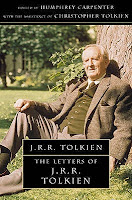
- The Letters of J.R.R. Tolkien by J.R.R. Tolkien
- The Book by Jessica Bell
Saturday, December 02, 2017
Virtual Advent Tour 2017: Winter Reads
It is that time of year again! Time for Virtual Advent Tour, organised by Sprite at Sprite Writes.
Considering this is a book(ish) blog, I think it is high time for a book-related Virtual Advent post. (How haven’t I done one in all these years yet?) So, here are some of my favourite reads for winter time.
As a child, I loved The Little Match Girl by Hans Christian Andersen. Although I cried my heart out every time I read it. I guess my masochist fiction preferences were showing early on. ;)
One of my
all-times favourite books is The Winter Ghosts by Kate Mosse. Happening over a winter night in the Pyrenees, it is a
poignant and touching story, written in beautiful, lyrical prose.
And lastly,
a novella from my favourite paranormal romance series (best read in order) to
warm you up (ahem ;)): Untouchable (IAD
#8) by Kresely Cole. Ice, winter, and Christmas – it has it all.
Considering this is a book(ish) blog, I think it is high time for a book-related Virtual Advent post. As a child, I loved The Little Match Girl by Hans Christian Andersen. Although I cried my heart out every time I read it. I guess my masochist fiction preferences were showing early on. ;)
The crying
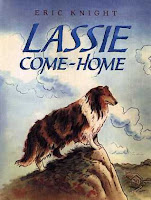
continued as I was a bit older with Lassie Come Home by Eric Knight. A good part of it is set in winter and it does contain
the spirit of the season, implicitly if not explicitly.
I find His Dark Materials by Philip Pullman a
good read for dark months of autumn and winter, both for its setting, story
lines, and the philosophical and religious questions it provokes.
One of my
all-times favourite books is The Winter Ghosts by Kate Mosse. Happening over a winter night in the Pyrenees, it is a
poignant and touching story, written in beautiful, lyrical prose.
And lastly,
a novella from my favourite paranormal romance series (best read in order) to
warm you up (ahem ;)): Untouchable (IAD
#8) by Kresely Cole. Ice, winter, and Christmas – it has it all.
I am always
on the look-out for new book recommendations.
What are your favourite winter/Christmas
reads?
Monday, September 25, 2017
All the Ugly and Wonderful Things by Bryn Greenwood
All the Ugly and Wonderful Things couldn’t have a more accurate and
fitting title as it does.
It is a painful
and difficult read, and I lost count of how many times I wanted to rage quite
it, but I had intentionally spoiled myself about the ending, which made me go
on, and I am so glad it did!
Going into
the story, I was quite wary, but it has turned out that the number one reason
for that was not at all justified, because of all the horrifying and
frustrating things in All the Ugly and
Wonderful Things, the one thing that never disgusted me was the relationship
between Wavy and Kellen.
Of course,
objectively and on principle, I wouldn't condone a relationship between real
people their age. However, in their particular circumstances as described in
this book I can’t judge them – not even Kellen – at all.
Because of
all the terrible things in Wavy’s life – from her drug-addicted and neglectful parents to poverty and the general, mostly non-understanding, atmosphere
of her time and environment – Kellen was not only the least terrible, but the
best thing of only few good things in her life.
Bryn
Greenwood does an astonishing job with her unique story-telling style with
multiple POVs (I especially loved the ‘growth’ of Wavy’s voice) which enable
the reader to grasp the full picture, making it obvious how Wavy and Kellen's love must have looked to outsiders and thus make their reactions perfectly understandable.
But she also provides what we don’t get in real life: an unobstructed insight
in the protagonists’ minds and hearts that made it impossible for me not to
root for the pair.
Therefore, as
much as All the Ugly and Wonderful Things
is heart-wrenchingly poignant, its pay-off is also heart-warming, and I couldn’t
but end up loving this book.
Thursday, September 14, 2017
The Letters of J. R. R. Tolkien
Tolkien’s
letters are at times tedious and repetitive – just as life can be – but for the
most part very compelling reading material.
For a fan
of Tolkien’s works, it is interesting to read about the process of how
they came to be written and published. Moreover, reading about his writing process itself
is both inspiring and motivational to a writer, although Tolkien might be
turning in his grave if he knew that people find his writing struggles either. Equally
inspiring and thought-provoking are Tolkien’s world-views and philosophies, both
general and academic, even if I disagree with some of them (which were a product
of his time.)
The language,
style, and tone of his letters range from intellectual and strictly formal to
warm, familiar, and humorous in places, with an occasional special brand of ‘saltiness’
shining through which I greatly appreciated, and show him not only as an author
but as a nuanced personality.
Tolkien’s
letters are probably best appreciated if read and digested little by little and
not to be sped through, although I have done precisely that with the second
half of the book because I got fed up with myself that it was taking me so long.
Saturday, September 02, 2017
The Cold King by Amber Jaeger
Note: This review contains SPOILERS.
At first, this was so bad that it was sort of entertaining.
We have a Cinderella-meets-the-Beauty-and
the-Beast-with-a-hint-of-the-Phantom-of-the-Opera-like story that reads like
terrible BDSM, just without sex (which actually makes it worse), but with a
generous dash of brainwashing.
The male
protagonist (aka the villain, I am certainly not calling him a hero) is a sadistic
and manipulative asshole, who throws the female protagonist in a dungeon to
make the transition from her old life to the new one ‘easier’ – for him, of
course. After all, it is much easier to brainwash someone to accept common
human decency and having one’s basic needs met as luxury if one has only ever
been shown cruelty – though, as they say, the absence of cruelty is not the
same as kindness – than win them over by treating them right from the
beginning.
The cold
king is a typical abuser, targeting the weak and isolated and tearing them down
before building them back up to his own desires by making them completely dependent
on him, all of which he justifies as improving their lives and showering them
in luxury they could never experience otherwise.
Even Calia recognises
that as shitty but falls for it hook, line, and sinker, as does everyone else –
who, by the way, does nothing to help her at least with good advice. But, after
all, that is neither Calia’s nor the others’ fault, since they are all victims
and Calia with her reasoning the most typical of them all.
The cold
king is supposed to be a tortured hero, but even if his pain is understandable,
it doesn’t excuse his behaviour. I couldn’t feel even remotely sorry for him or
his predicament for being cursed (with the curse of his own doing.) He also has
a giant ego, and naturally, as people of his kind do, knows better what is best
for Calia and others then they do themselves.
Calia
herself is an ‘extreme Cinderella’, ignored and disliked by everyone, including
her horrible, abusive, and neglectful mother. Her poor fortune and suffering
(in comparison to everything else, all her crying was the least of a bother) is
exaggerated to the maximum in order to garner sympathy. Needless to say, it
didn’t work for me.
She is also
quite a bit of a Mary Sue, suddenly becoming pretty (no, hair growth does not
work like that!), graceful, and smart (she learns to read very fast, knows things
she had nowhere to learn (such as doing cuff-links), passes sound judgements,
etc.), except, of course, for her own situation.
All of the above
perpetuates the terrible message that if a woman suffers quietly through abuse,
accepts her lot in life, and moulds herself completely to the abuser’s wishers,
she will get her fairy-tale ending.
Because, of
course, in the end the male protagonist falls in love with her (which also
undoes the curse, duh!) and learns the error of his ways and changes for the
better and treats her like a queen (literally) – which doesn’t happen in real
life.
Calia only develops
a bit of a spine towards the end, but only because she is hurting by her love
not being requited, and not, you know, because of all other terrible things the
cold king has done to her.
The book
only gets worse after the half-way mark when we suddenly get multiple, jumping
POVs, including the omniscient POV (either that or Calia becomes telephathic),
and every ridiculous romance (but not romantic) cliché in existence is used and
abused for the contrived quasi-love story.
With
putting Calia in the role of a personal servant – who basically does what a
valet would – and other characters’ occupations, Jaeger tried to subvert gender
roles, which would be commendable, but fell flat due to the characterization
which was unflattering in Calia’s case and virtually non-existent in other
characters who were mostly bland and one-dimensional.
Add to this
an attempt of ‘progressiveness’ by having the cold king be accepting of a
same-sex couple, except that it was poorly executed, since kindly ‘overlooking’
their ‘friendship’ is not exactly the same as not being homophobic.
I won’t
even go into all the inconsistencies within the story. For example, the setting
is undecided on whether to be steampunk-ish with some ‘high’ tech, such as a
likeness of modern plumbing and the use of diamonds for industry and craft, or one
of a pre-industrial impoverished agricultural society.
Perhaps indecisiveness
is at the core of this book’s problems. The blurb says that “… Not every Beast is a prince charming at
heart and not every Beauty is a maiden just waiting for love…” and perhaps
the author wanted to be edgy and actually re-tell The Beauty and the Beast as a story about abuse, but failed at it,
because the end result is something that goes back and forth between trying to
be just that (mostly) and a classic HEA fairy-tale but ending up as a horrible
mess instead.
Overall, by
the end of the book, I wasn’t entertained by the bad-ness of it anymore, only disgusted.
Subscribe to:
Posts (Atom)