As a sort-of preconception of The Stranger, A Happy Death is also its flip-side in which Mersault gets away with pre-meditated murder (as opposed to what we could say is, if I remember correctly, involuntary manslaughter in The Stranger.)
While Mersault of A Happy Death is not yet the alienated and detached Mersault of The Stranger, for he still possesses the ability to be affected and to form attachment, the early seeds of absurdism are present in his quest of finding happiness.
In accord with his – for the lack of a better word – victim’s claim that money cannot buy happiness but it can buy time, which is essential for the pursuit of doing what you want and enabling one to be one’s true self, Mersault discovers that one can only find happiness with oneself, in the very solitude of being oneself.
However, that is easier said than done, as having time does not guarantee happiness per se. To be happy requires being the will to be happy, to immerse oneself in the present, in the here and now, and arrange the time one has to that purpose.
And that state is what Mersault manages to achieve and does in the end meet – although an outside observer would call it all but one – a happy death.
I must say I find these concepts both mind-boggling and intriguing but also agreeable – to an extent; they certainly give one food-for-thought and the desire to revisit them and this novel as well as its eventual and more famous successor.
Additionally, A Happy Death (as well as The Stranger, as far as I remember), has a certain ease of language, and I found myself liking the style very much; I particularly loved how Camus uses the wording and pacing to illustrate various settings and Mersault’s states of mind.
My edition came with a lengthy afterword, providing literary analysis I disagree with on several points.
Chiefly, it simplifies Mersault motive for his act of murder merely as greed (and jealousy, which I couldn’t see at all), whereas I saw it at least in equal part as an act – albeit certainly not selfless – of some kind of mercy that can be basically considered euthanasia of the man who per his own admission did not want to live the life he had but lacked the courage and strength to end it himself. (To be clear, I am not exonerating Mersault’s motives, I just think they are more complex that Mr. Sarrocchi would want the reader to believe.)
I also do not think the discrepancies between the autobiographical elements of Camus’s life and their imperfect alignment in fiction should be held against the novel. After all, complete truthfulness to real life is not the measure of quality of fiction.
And lastly, according to Mr. Sarrocchi, A Happy Death supposedly failed as a novel in terms of form and composition, which must have been the reason it was not published at the time of writing and was later reworked.
Nevertheless, to conclude, I think that in 80 years since the novel’s conception (and 45 since the aforementioned critique’s) the literary landscape has changed enough that we, new readers, can appreciate A Happy Death from a different perspective and with the experience of the present time which Camus’s work seems to resonate with perhaps better than it did with the time of its origin.
Monday, June 25, 2018
Tuesday, May 22, 2018
Brave New World by Aldous Huxley
Note: This review contains SPOILERS.
After overcoming the initial shock of Huxley’s brave new capitalist eugenics utopia, I kept asking myself through most of the book what Huxley was high on and reminding myself that he was into experimenting with hallucinogens at the time and thus he might have actually been high on something.
While I have so far liked what I have read of contemporary dystopia, I have found the ‘old’, classic dystopia, such as Brave New World or, also recently read, Animal Farm much less likeable. On the other hand, I tremendously enjoyed Verne’s Paris in the Twentieth Century. So perhaps the fault is in these specific books.
It is strange how all these authors of the past viewed the future, which has in the meantime become our present in some cases, as a world of complete ‘moral’ disintegration of society that is entirely submitted to the ‘values’ of capitalism, consumerism, and (to an extent) technological advancement, rejecting emotion, art, and personal freedom.
And yet, I don’t see – or foresee – these bleak visions coming true. Granted, the 17th century after Ford of the Brave New World is still quite a bit ahead. Nevertheless, I think we can safely hope – as we see the very elements (or similar ones) of the scientific progress mentioned in these stories having already become our reality without most of the ‘predicted’ accompanying societal degradation – humanity will never come that far, or better said, fall that low. Maybe it is because, as a self-identified pessimistic idealist, I think individual people can be horrible (as well as others can be amazing), but I have faith in humanity as a whole.
But I digress.
To return to Brave New World, this strangely hopeless (and implausible) vision of the distant future (despite its utter ‘stability’ and overall ‘happiness’ of its inhabitants) was not even the major reason for my dislike of this book.
My biggest complaint is that Huxley keeps picking up various characters’ stories and not finishing them, save one, and what we see of them just seems under-developed, going against all the most important rules of writing a good story – at least by modern standards. I daresay that if any contemporary author pitched this story, it wouldn’t get published without some major additional work.
For example, when we first meet Bernard and Lenina, they both act ‘queer’ for the ‘civilised’ society of the book’s universe, seeking solitude, lacking lovers, or being too attached to a single one – and nothing comes out of it, apart from their trip to the reservation.
We can only guess that Lenina finds the experience so terrible that she decides to fully immerse herself in what is considered proper behaviour in the ‘civilisation’– but that is just a guess, as her change of heart is abrupt, never explained, and her past ‘queerness’ is never mentioned again. (Shouldn’t she be able to at least somewhat understand or compare her, albeit past, fleeting feelings, to Bernard’s or even John’s?)
Bernard and Helmholtz, who remain ‘queer’ and dissatisfied with the ‘civilisation’, get sent to an island for that reason – and we learn that that is actually more a reward than a punishment because islands are where people can be more individual than within the rest of the society – but that is the end of their story. Whereas, I would be very much interested in how they fare afterwards and whether they can realise their selves better there, outside of the ‘civilisation’.
And finally, there is John, the ‘Savage’. I’ll just mention the two things that irked me the most, besides the blatant racism typical of Huxley’s time.
Firstly, John forgetting about Linda when she dies. Sure, he remembers her. What I mean is: this is a man who was raised on a reservation, who is used to the human customs as we know them (mostly), who must have surely been used to something akin mourning and funerals, and he just walks out of the hospital? He doesn’t even suggest a funeral? I assume he has been told what happens to the dead, but he just accepts it? This goes completely against his character.
And secondly, how he ends up: yes, sure, in line with Huxley’s racist, capitalist, eugenics beliefs, whoever cannot adapt to his brave new world can only be driven to death by both their internal and external demons. What a pile of equine excrement.
To top it all, the writing itself, sometimes verging on stream of consciousness, is not anything to laud, either.
Hence, in conclusion, for all that Brave New World may be a classic (I'm only giving it two stars for that reason) – and it certainly has an intriguing concept that could provoke much thought, but lacks in execution and development – it just did not work for me.
After overcoming the initial shock of Huxley’s brave new capitalist eugenics utopia, I kept asking myself through most of the book what Huxley was high on and reminding myself that he was into experimenting with hallucinogens at the time and thus he might have actually been high on something.
While I have so far liked what I have read of contemporary dystopia, I have found the ‘old’, classic dystopia, such as Brave New World or, also recently read, Animal Farm much less likeable. On the other hand, I tremendously enjoyed Verne’s Paris in the Twentieth Century. So perhaps the fault is in these specific books.
It is strange how all these authors of the past viewed the future, which has in the meantime become our present in some cases, as a world of complete ‘moral’ disintegration of society that is entirely submitted to the ‘values’ of capitalism, consumerism, and (to an extent) technological advancement, rejecting emotion, art, and personal freedom.
And yet, I don’t see – or foresee – these bleak visions coming true. Granted, the 17th century after Ford of the Brave New World is still quite a bit ahead. Nevertheless, I think we can safely hope – as we see the very elements (or similar ones) of the scientific progress mentioned in these stories having already become our reality without most of the ‘predicted’ accompanying societal degradation – humanity will never come that far, or better said, fall that low. Maybe it is because, as a self-identified pessimistic idealist, I think individual people can be horrible (as well as others can be amazing), but I have faith in humanity as a whole.
But I digress.
To return to Brave New World, this strangely hopeless (and implausible) vision of the distant future (despite its utter ‘stability’ and overall ‘happiness’ of its inhabitants) was not even the major reason for my dislike of this book.
My biggest complaint is that Huxley keeps picking up various characters’ stories and not finishing them, save one, and what we see of them just seems under-developed, going against all the most important rules of writing a good story – at least by modern standards. I daresay that if any contemporary author pitched this story, it wouldn’t get published without some major additional work.
For example, when we first meet Bernard and Lenina, they both act ‘queer’ for the ‘civilised’ society of the book’s universe, seeking solitude, lacking lovers, or being too attached to a single one – and nothing comes out of it, apart from their trip to the reservation.
We can only guess that Lenina finds the experience so terrible that she decides to fully immerse herself in what is considered proper behaviour in the ‘civilisation’– but that is just a guess, as her change of heart is abrupt, never explained, and her past ‘queerness’ is never mentioned again. (Shouldn’t she be able to at least somewhat understand or compare her, albeit past, fleeting feelings, to Bernard’s or even John’s?)
Bernard and Helmholtz, who remain ‘queer’ and dissatisfied with the ‘civilisation’, get sent to an island for that reason – and we learn that that is actually more a reward than a punishment because islands are where people can be more individual than within the rest of the society – but that is the end of their story. Whereas, I would be very much interested in how they fare afterwards and whether they can realise their selves better there, outside of the ‘civilisation’.
And finally, there is John, the ‘Savage’. I’ll just mention the two things that irked me the most, besides the blatant racism typical of Huxley’s time.
Firstly, John forgetting about Linda when she dies. Sure, he remembers her. What I mean is: this is a man who was raised on a reservation, who is used to the human customs as we know them (mostly), who must have surely been used to something akin mourning and funerals, and he just walks out of the hospital? He doesn’t even suggest a funeral? I assume he has been told what happens to the dead, but he just accepts it? This goes completely against his character.
And secondly, how he ends up: yes, sure, in line with Huxley’s racist, capitalist, eugenics beliefs, whoever cannot adapt to his brave new world can only be driven to death by both their internal and external demons. What a pile of equine excrement.
To top it all, the writing itself, sometimes verging on stream of consciousness, is not anything to laud, either.
Hence, in conclusion, for all that Brave New World may be a classic (I'm only giving it two stars for that reason) – and it certainly has an intriguing concept that could provoke much thought, but lacks in execution and development – it just did not work for me.
Labels:
** A LITTLE STRANGE,
Classic,
Dystopia,
Fiction,
Review
Sunday, March 25, 2018
Animal Farm by George Orwell
As I understand it, the entire story of Animal Farm is one giant cynical metaphor for a failed communist utopia (because a communist utopia is a fail all of itself). It includes all the most representative tropes from mindless masses (animals) and propaganda (Squealer) to class enemies (upper class/management/capital owners), both outside (humans) and inside (Snowball and other ‘traitors’) ones, and everything in between.
In addition, its allusions to the strife between the West and the East, reminiscent of the Cold War that was yet to begin at the time of writing and publishing the book as well as the story’s cycle from capitalism to communism and back (as it happened in the 1990s) are also quite visionary.
As such, Animal Farm is a very clever work of fiction.
However, coming from one of those ex-communist countries, I also feel more than a little offended by its cynical satire that mocks the silly, blind working-class people, comparing them to animals.
The insult is somewhat softened only by the fact that the story also shows that neither the capitalist masters nor the new ‘people’s’ leaders have actual working people’s best interest in mind but only their own and would therefore ally themselves with each other despite whatever contrary principles (that can always be twisted to suit them) they otherwise preach to the people ‘below’ them.
Next, the final outcome of the story implies that the working masses are incapable (too stupid and meek) of the self-managing they long for; since they are only capable of (blind) loyalty and obedience, they should clearly submit to the will of their betters (of which the better ones are the capitalists, of course).
In that point, Animal Farm also serves as a warning/anti-communist propaganda, which makes sense, given the time of its conception: there is no hope in defeating capitalism, no recourse for lower and working classes to free themselves of governance and better their positions/lives; quite the contrary, they should be grateful for their lot in the capitalist world.
Personally, I think both capitalism and communism are failed systems and we need to find an alternate viable option that would allow people both individual expressions of their aspirations as well as offer protections to the underprivileged and limit their exploitation by the privileged (what social state is supposed to be if it wasn’t all too often hijacked/strong-armed by capitalism.)
But, I strongly resent the Western media’s portrayal of people from (ex-)communist countries that reduces them to half-starved idiots decades and more behind times, which isn’t true and has, majorly, never been, not to mention that the so-called ‘Eastern Bloc’ has never been a uniform, one-dimensional entity and there have been vast differences between, for example, USSR and Yugoslavia.
Hence, I have mixed feelings about Animal Farm; I could give it either 4-5 or 1 stars, so I’m giving it sort of median 3. Still, it is a highly thought-provoking story that is quick and easy to read (and also fun at times if it doesn’t make you mad) and as such I’d recommend it as well-worth to read.
In addition, its allusions to the strife between the West and the East, reminiscent of the Cold War that was yet to begin at the time of writing and publishing the book as well as the story’s cycle from capitalism to communism and back (as it happened in the 1990s) are also quite visionary.
As such, Animal Farm is a very clever work of fiction.
However, coming from one of those ex-communist countries, I also feel more than a little offended by its cynical satire that mocks the silly, blind working-class people, comparing them to animals.
The insult is somewhat softened only by the fact that the story also shows that neither the capitalist masters nor the new ‘people’s’ leaders have actual working people’s best interest in mind but only their own and would therefore ally themselves with each other despite whatever contrary principles (that can always be twisted to suit them) they otherwise preach to the people ‘below’ them.
Next, the final outcome of the story implies that the working masses are incapable (too stupid and meek) of the self-managing they long for; since they are only capable of (blind) loyalty and obedience, they should clearly submit to the will of their betters (of which the better ones are the capitalists, of course).
In that point, Animal Farm also serves as a warning/anti-communist propaganda, which makes sense, given the time of its conception: there is no hope in defeating capitalism, no recourse for lower and working classes to free themselves of governance and better their positions/lives; quite the contrary, they should be grateful for their lot in the capitalist world.
Personally, I think both capitalism and communism are failed systems and we need to find an alternate viable option that would allow people both individual expressions of their aspirations as well as offer protections to the underprivileged and limit their exploitation by the privileged (what social state is supposed to be if it wasn’t all too often hijacked/strong-armed by capitalism.)
But, I strongly resent the Western media’s portrayal of people from (ex-)communist countries that reduces them to half-starved idiots decades and more behind times, which isn’t true and has, majorly, never been, not to mention that the so-called ‘Eastern Bloc’ has never been a uniform, one-dimensional entity and there have been vast differences between, for example, USSR and Yugoslavia.
Hence, I have mixed feelings about Animal Farm; I could give it either 4-5 or 1 stars, so I’m giving it sort of median 3. Still, it is a highly thought-provoking story that is quick and easy to read (and also fun at times if it doesn’t make you mad) and as such I’d recommend it as well-worth to read.
Labels:
*** STRANGE ENOUGH,
Classic,
Dystopia,
Fiction,
Review
Thursday, March 08, 2018
Pet (Captive Prince short stories #4) by C. S. Pacat
Note: This review contains SPOILERS.SUMMARY (from Goodreads): Pet follows the rise of Ancel at the poisonous court of Vere. Set during the events of Captive Prince.
MY THOUGHTS:
Pet turned out to be one of those why-haven't-I-read-it-sooner books for me, because I wasn't particularly interested in Ancel, but I should have known better.
Not only did C. S. Pacat ruin me with Laurent/Damen feels despite them appearing in the story only in that single horrible scene (you know which one) yet again but also managed to make me feel for Ancel.
On first impression, Ancel appears to be driven by ruthless ambition alone, but beyond that it is survival itself that drives Ancel to master selling himself in order to climb the social ladder to the top; and who can blame him for that? The path is, however, paradoxical, because the higher one gets in the Veretian society and the more means for a (luxurious) living one obtains, the more one's very life is in danger.
In addition to the familiar atmosphere of intrigue, we see through Ancel's eyes how ingrained the oppressive concept of 'pets' is in pets themselves, most notably at his utter disdain for Erasmus and his predicament/distress, which with only his own experience to judge the matters by makes perfect sense (despite, obviously, being wrong.)
I really liked Berenger's character and the somewhat surprising tones of the relationship between Ancel and Berenger.
And finally, I loved the ending for the rather unexpected positive turn that looks into a hopeful (hopefully!) future, knowing the path of the main series. But at the same time I am also a bit mad/sad/frustrated that this is The. End. Darn.
Labels:
**** VERY STRANGE,
Adult,
Fantasy,
Historical,
LGBT+,
Review,
Romance
Sunday, December 31, 2017
My Life According to the Books I Read in 2017
Since I've had a very rich reading year this year, I decided to do the my-year-in-books-I-read end-of-year wrap up meme which was created by Christine at The happily ever after:
Describe yourself: Night Owl by M. Pierce
How do you feel: Wicked all the Way by Shayla Black
Describe where you currently live: Cruel Beauty by Rosamund Hodge
If you could go anywhere, where would you go: The Summer Palace by C.S. Pacat
Your favourite form of transportation: Angels' Flight by Nalini Singh
Your best friend is: Treasure Island by R.L. Stevenson
You and your friends are: Beyond Jealousy by Kit Rocha
What's the weather like: Dark Skye by Kresely Cole
What is life to you: All the Ugly and Wonderful Things by Bryn Greenwood
Your fear: Closed Doors by Kit Rocha
What is the best advice you have to give: Truth by Sherri Hayes
Thought for the day: Blank Canvas by Kit Rocha
How I would like to die: Beyond Doubt by Kit Rocha
My soul's present condition: Sleeping Giants by Sylvain Neuvel
And that's it for me this year, book blogging-wise.
Have a nice New Year's Eve and many good books (and all other good things) in 2018!
Tuesday, December 12, 2017
Top Ten Favorite Books of 2017
Top Ten
Tuesday is an original feature/weekly meme created hosted at The Broke and the Bookish.
Wow, I
haven’t done a Top Ten Tuesday post in years!
But since
this has been a good reading year for me and I actually have a variety of books
to pick from, here are my top ten books I read in 2017 (in random order):
- Uprooted by Naomi Novik
- All the Ugly and Wonderful Things by Bryn Greenwood
- Angels'
Blood (Guild Hunter #1)
by Nalini Singh – or really, the entire Guild Hunter series
- Beyond Jealousy (Beyond #4) by Kit Rocha – or,
again, the entire Beyond series
- Ashwin (Gideon's Riders #1) by Kit Rocha
- Call Me by Your Name by
André Aciman
- Sweet Ruin (IAD #16) by Kresley Cole
- Sleeping Giants (Themis Files #1) by Sylvain Neuvel
- The Letters of J.R.R. Tolkien by J.R.R. Tolkien
- The Book by Jessica Bell
Saturday, December 02, 2017
Virtual Advent Tour 2017: Winter Reads
It is that time of year again! Time for Virtual Advent Tour, organised by Sprite at Sprite Writes.
Considering this is a book(ish) blog, I think it is high time for a book-related Virtual Advent post. (How haven’t I done one in all these years yet?) So, here are some of my favourite reads for winter time.
As a child, I loved The Little Match Girl by Hans Christian Andersen. Although I cried my heart out every time I read it. I guess my masochist fiction preferences were showing early on. ;)
One of my
all-times favourite books is The Winter Ghosts by Kate Mosse. Happening over a winter night in the Pyrenees, it is a
poignant and touching story, written in beautiful, lyrical prose.
And lastly,
a novella from my favourite paranormal romance series (best read in order) to
warm you up (ahem ;)): Untouchable (IAD
#8) by Kresely Cole. Ice, winter, and Christmas – it has it all.
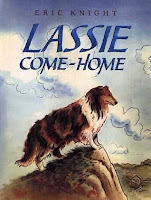
Considering this is a book(ish) blog, I think it is high time for a book-related Virtual Advent post. As a child, I loved The Little Match Girl by Hans Christian Andersen. Although I cried my heart out every time I read it. I guess my masochist fiction preferences were showing early on. ;)
The crying
continued as I was a bit older with Lassie Come Home by Eric Knight. A good part of it is set in winter and it does contain
the spirit of the season, implicitly if not explicitly.
I find His Dark Materials by Philip Pullman a
good read for dark months of autumn and winter, both for its setting, story
lines, and the philosophical and religious questions it provokes.
One of my
all-times favourite books is The Winter Ghosts by Kate Mosse. Happening over a winter night in the Pyrenees, it is a
poignant and touching story, written in beautiful, lyrical prose.
And lastly,
a novella from my favourite paranormal romance series (best read in order) to
warm you up (ahem ;)): Untouchable (IAD
#8) by Kresely Cole. Ice, winter, and Christmas – it has it all.
I am always
on the look-out for new book recommendations.
What are your favourite winter/Christmas
reads?
Monday, September 25, 2017
All the Ugly and Wonderful Things by Bryn Greenwood
All the Ugly and Wonderful Things couldn’t have a more accurate and
fitting title as it does.
It is a painful
and difficult read, and I lost count of how many times I wanted to rage quite
it, but I had intentionally spoiled myself about the ending, which made me go
on, and I am so glad it did!
Going into
the story, I was quite wary, but it has turned out that the number one reason
for that was not at all justified, because of all the horrifying and
frustrating things in All the Ugly and
Wonderful Things, the one thing that never disgusted me was the relationship
between Wavy and Kellen.
Of course,
objectively and on principle, I wouldn't condone a relationship between real
people their age. However, in their particular circumstances as described in
this book I can’t judge them – not even Kellen – at all.
Because of
all the terrible things in Wavy’s life – from her drug-addicted and neglectful parents to poverty and the general, mostly non-understanding, atmosphere
of her time and environment – Kellen was not only the least terrible, but the
best thing of only few good things in her life.
Bryn
Greenwood does an astonishing job with her unique story-telling style with
multiple POVs (I especially loved the ‘growth’ of Wavy’s voice) which enable
the reader to grasp the full picture, making it obvious how Wavy and Kellen's love must have looked to outsiders and thus make their reactions perfectly understandable.
But she also provides what we don’t get in real life: an unobstructed insight
in the protagonists’ minds and hearts that made it impossible for me not to
root for the pair.
Therefore, as
much as All the Ugly and Wonderful Things
is heart-wrenchingly poignant, its pay-off is also heart-warming, and I couldn’t
but end up loving this book.
Subscribe to:
Posts (Atom)